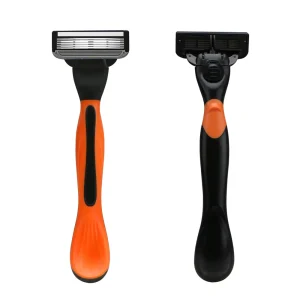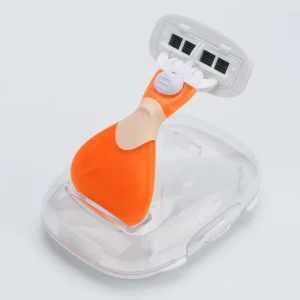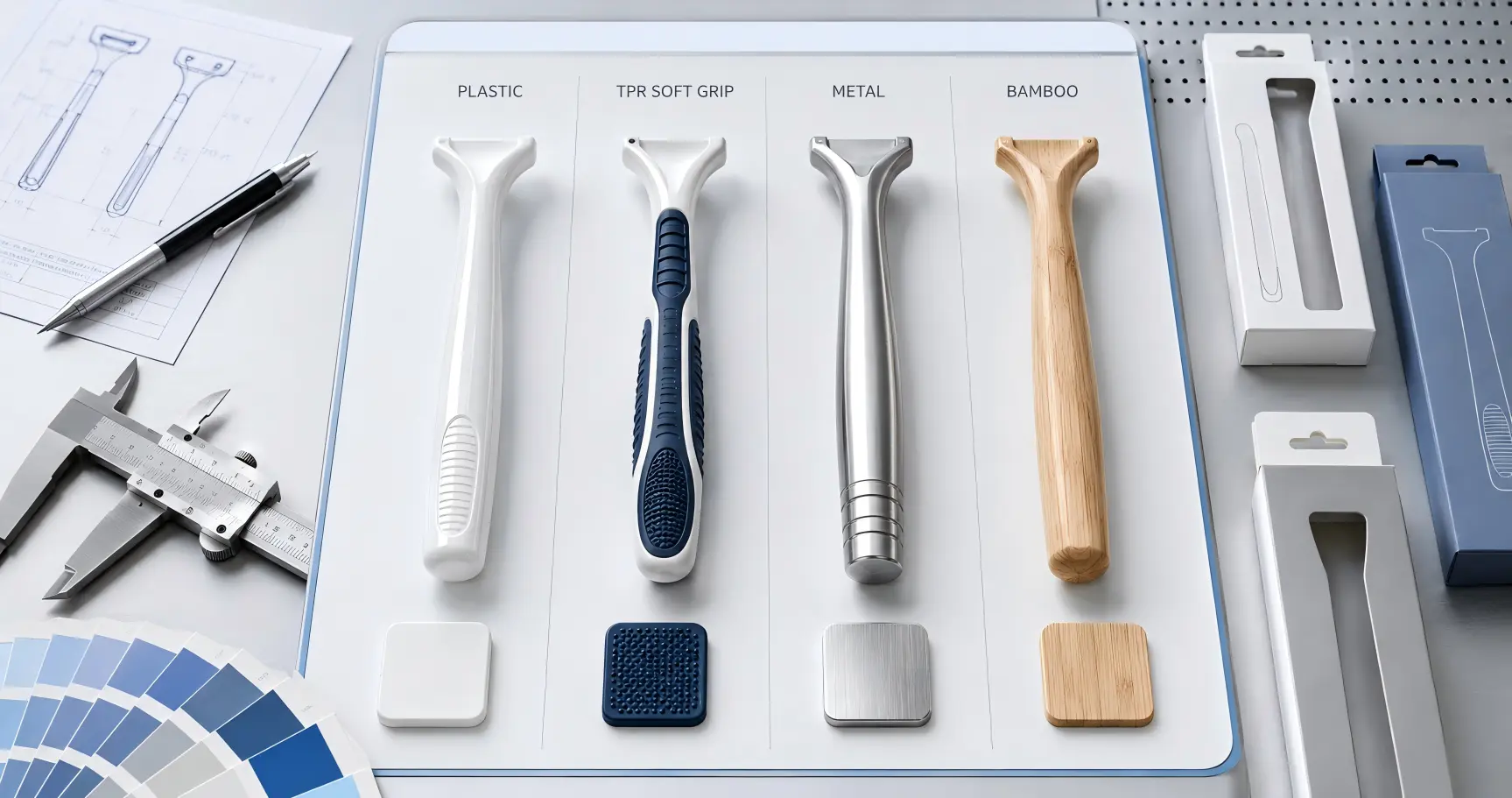
A razor handle may look simple, but it directly affects grip, comfort, safety, and repeat purchase. In a wet bathroom environment, a smooth handle can slip. In a humid storage environment, poor materials may discolor, deform, crack, or lose surface quality. In e-commerce parcel delivery, weak handles can be scratched or damaged before the customer opens the package. For retailers, importers, wholesalers, and distributors, this becomes a real business problem: complaints, returns, low reviews, and weak brand trust. The solution is not choosing the cheapest handle material. The solution is selecting the right plastic, TPR, metal, or bamboo handle according to user scenario, channel, price point, and OEM/ODM customization needs.
The best razor handle material should match grip performance, water resistance, handle weight, cost target, packaging channel, and brand positioning. Haward Razor is a professional Manufacturer offering Customizable OEM and ODM razor handle solutions for plastic, TPR, metal, and bamboo product lines.
This guide helps buyers understand how different handle materials perform in real applications. We will compare technical properties, use scenarios, ergonomic logic, quality control points, and Supplier evaluation methods for private label razor projects.
Plastic Handles: The Practical Choice for High-Volume Razor Programs
Plastic handles remain the most widely used option in disposable razors, women’s razors, eyebrow razors, travel razors, and promotional shaving kits. The reason is clear: plastic supports stable injection molding, flexible shape design, high color variety, and controllable unit cost. For a Manufacturer, plastic also allows efficient mass production and repeatable OEM supply.
However, “plastic” is not one material. Common razor handle materials include PP, ABS, PS, and blended engineering plastics. PP is often used for cost-sensitive disposable razors because it is light, water-resistant, and suitable for high-volume production. ABS provides better rigidity, better surface finish, and a more premium appearance. PS can be used in some low-cost structures, but the handle design must consider brittleness and impact resistance.
Key Technical Points for Plastic Handles
- Material selection: PP for value products, ABS for stronger visual quality, and engineered blends for special structures.
- Injection molding stability: controls handle shape, surface defects, shrinkage, and repeat order consistency.
- Color masterbatch control: important for private label brand consistency.
- Surface texture: matte, glossy, frosted, or patterned texture changes both appearance and grip.
- Water resistance: necessary for bathroom humidity, shower use, and long-term consumer storage.
Plastic is especially suitable for buyers who need Customizable colors, fast OEM development, lower MOQ options, and stable cost control. A professional Supplier should help buyers choose the correct resin instead of only quoting a general plastic handle.
TPR Handles: Better Grip for Wet Hands and Comfort Positioning
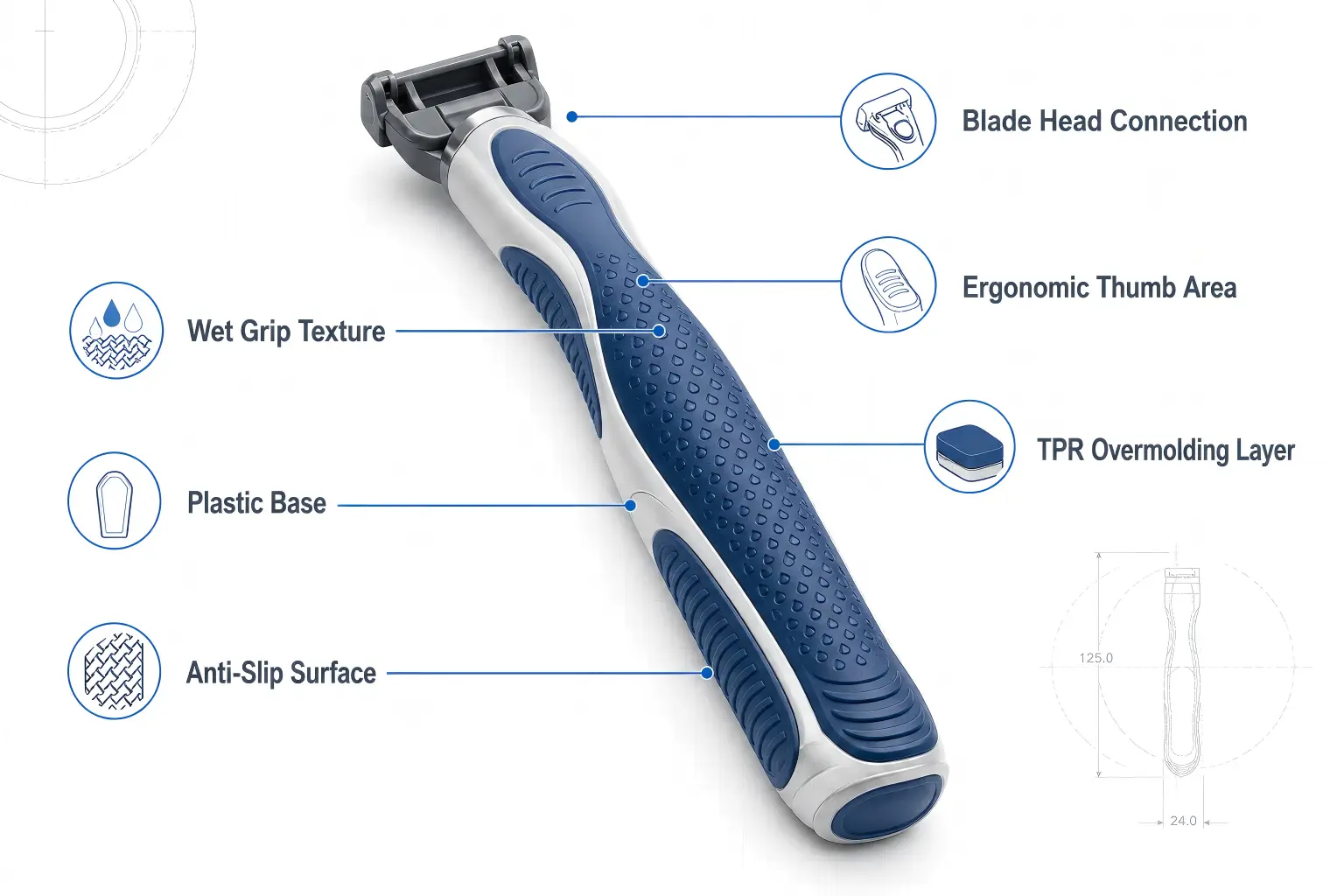
TPR is commonly used as a soft-touch grip area on razor handles. It can be overmolded onto a plastic base or inserted as a grip strip. In real shaving use, TPR solves one of the most common customer pain points: the handle becomes slippery when exposed to water, soap, shower gel, shaving foam, or body wash.
For women’s razors, TPR improves control when shaving legs, underarms, and curved areas. For men’s razors, it helps maintain stable hand control around jawlines, chin, and facial contours. For travel razors, TPR can improve user confidence even when the handle is shorter than a full-size razor.
Recommended TPR Engineering Factors
- Shore A hardness: commonly around 35-70 Shore A, depending on softness, grip, and durability needs.
- Overmolding adhesion: TPR must bond well with the base plastic to avoid peeling.
- Grip pattern depth: should increase friction without trapping too much shaving residue.
- Color stability: important for light-colored handles and long retail display periods.
- Wet grip performance: should be checked under soap foam exposure and repeated rinsing.
When TPR Is Most Suitable
TPR is best for mid-range and premium razors where comfort, safety, and control are important selling points. For OEM and ODM projects, TPR also gives the product a more professional and user-friendly appearance. A responsible Manufacturer should test the TPR grip area with actual shaving motion, not only visual inspection.
Metal Handles: Premium Weight, Durability, and Gift Set Value
Metal handles are used when the razor needs a stronger premium image. They are common in safety razors, refillable razors, high-end grooming kits, and gift sets. Compared with plastic, metal provides a heavier hand feel, stronger perceived durability, and better shelf presence. In online retail photography, a metal handle can also make the product look more valuable.
Common metal materials include zinc alloy, stainless steel, and aluminum alloy. Zinc alloy is often used when buyers want heavier handles with plated finishes. Stainless steel offers stronger corrosion resistance and long-term durability, especially for safety razors. Aluminum alloy is lighter and can support anodized color finishes.
Metal Handle Selection Points
- Handle weight: affects shaving balance, premium feel, and shipping cost.
- Surface treatment: plating, polishing, brushing, anodizing, or laser marking changes appearance and durability.
- Anti-slip structure: knurling, grooves, or textured sections may be needed for wet-use conditions.
- Thread accuracy: critical for safety razor heads and replaceable systems.
- Corrosion resistance: important for humid bathroom storage and long-term use.
Metal handles are not always suitable for every program. They increase cost, weight, and surface inspection requirements. But for premium ODM projects, safety razor gift sets, and high-value private label lines, metal can help a brand avoid direct price comparison with low-cost disposable products.
Bamboo Handles: Natural Positioning With Higher Material Control Requirements
Bamboo handles are often selected for natural, eco-conscious, or lifestyle-oriented razor lines. They are suitable for safety razors, gift sets, women’s grooming kits, hotel amenity programs, and brands that want to reduce plastic appearance. Bamboo offers a warmer and more natural feel than plastic or metal.
But bamboo is a natural material, not an industrial resin. This means every handle may have slight differences in grain, tone, and texture. Buyers should accept a reasonable natural variation range. More importantly, bamboo must be properly dried, machined, sealed, and packed. If not controlled well, it may crack, absorb moisture, swell, or develop surface issues during export shipping.
Bamboo Handle Quality Requirements
- Moisture content control: necessary before machining, coating, and assembly.
- Surface sealing: helps reduce water absorption in humid bathroom environments.
- Natural color tolerance: should be confirmed with approved samples.
- Interface strength: metal or plastic connection parts must be securely assembled.
- Packaging ventilation: reduces risk during long-distance export logistics.
Bamboo is a good choice when the brand story values natural texture and visual differentiation. A professional Supplier should explain the material limitations clearly before production, especially for OEM and ODM buyers who require consistent retail presentation.
Material Comparison by Application Scenario
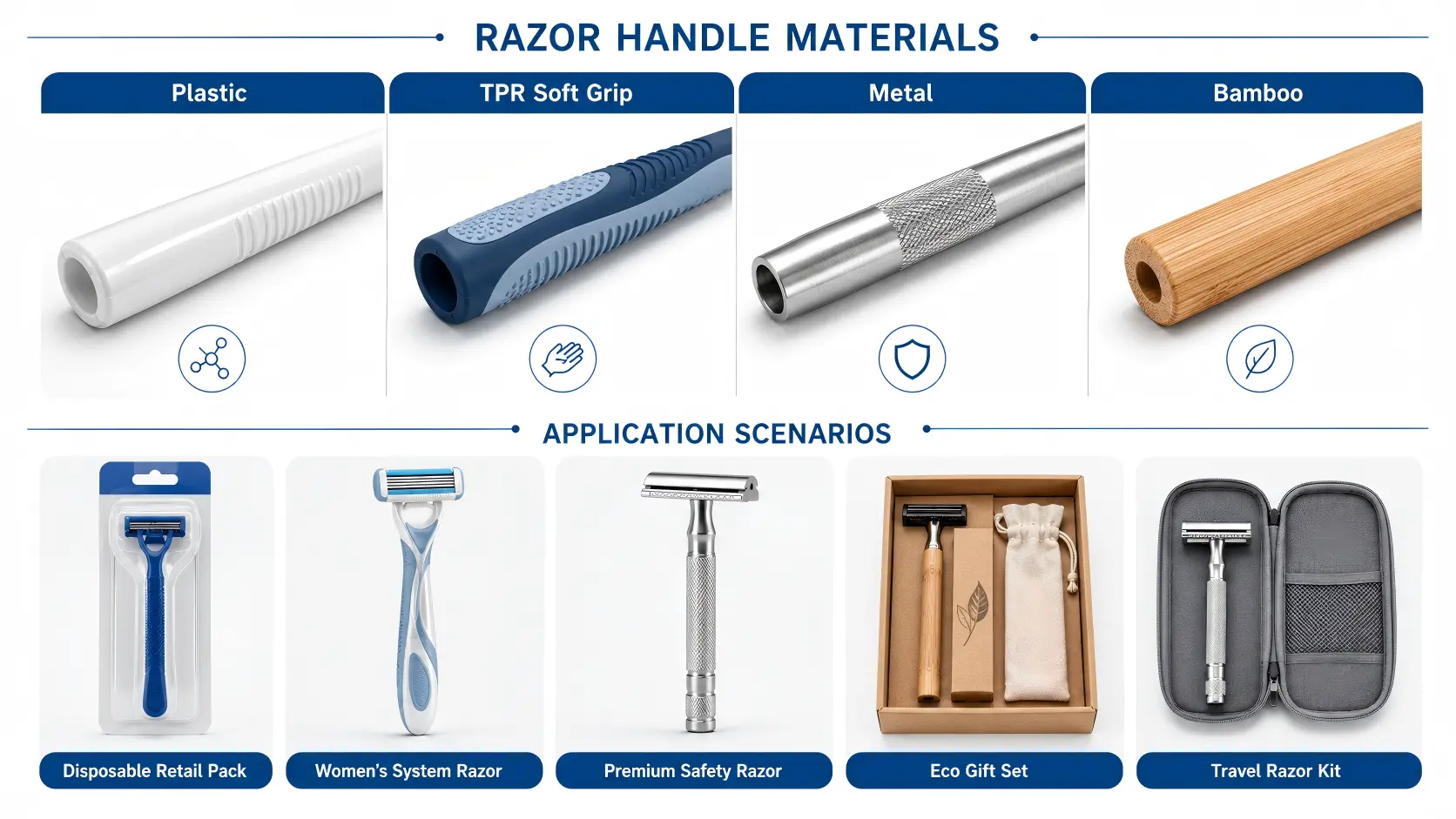
Different sales channels create different handle requirements. A supermarket disposable razor needs cost control and stable volume. An online women’s razor needs strong product photos and a comfortable user story. A safety razor gift set needs premium weight and surface finish. A travel kit needs compact size and case compatibility. The handle material should match the application system topology, not just the target price.
| Application Scenario | Recommended Material | Key Technical Requirement | Buyer Benefit |
|---|---|---|---|
| Disposable razor retail pack | PP or PS plastic | Low weight, stable molding, cost control | Competitive pricing and high-volume supply |
| Women’s system razor | ABS + TPR | Wet grip, color consistency, ergonomic handle curve | Better comfort and stronger retail appeal |
| Premium safety razor | Zinc alloy or stainless steel | Corrosion resistance, handle balance, surface finish | Premium positioning and longer product life |
| Eco grooming gift set | Bamboo + metal interface | Moisture control, surface sealing, natural tolerance | Natural appearance and sustainable product story |
| Travel razor kit | Plastic or ABS + TPR | Case fit, scratch resistance, compact packaging | Easy bundling and better portability |
Performance Comparison for Plastic, TPR, Metal, and Bamboo Handles
For B2B sourcing, buyers should compare handle materials through real performance factors. The following table can be used as an early selection reference. Final specifications should always be confirmed through samples, packaging tests, and mass production approval.
| Material Option | Relative Weight | Grip Performance | Water Resistance | Typical Market Position |
|---|---|---|---|---|
| PP plastic | Low | Medium with texture | Good | Value disposable razor |
| ABS plastic | Medium-low | Medium | Good | Mid-range system razor |
| ABS + TPR | Medium | High wet grip | Good | Comfort-focused women’s or men’s razor |
| Zinc alloy | High | Medium to high with texture | Depends on plating quality | Premium handle and gift set |
| Stainless steel | High | Medium to high with knurling | Very good | Premium safety razor |
| Bamboo | Medium-low | Medium natural grip | Requires surface sealing | Eco and natural product line |
Handle-Cartridge Interface and Product System Fit
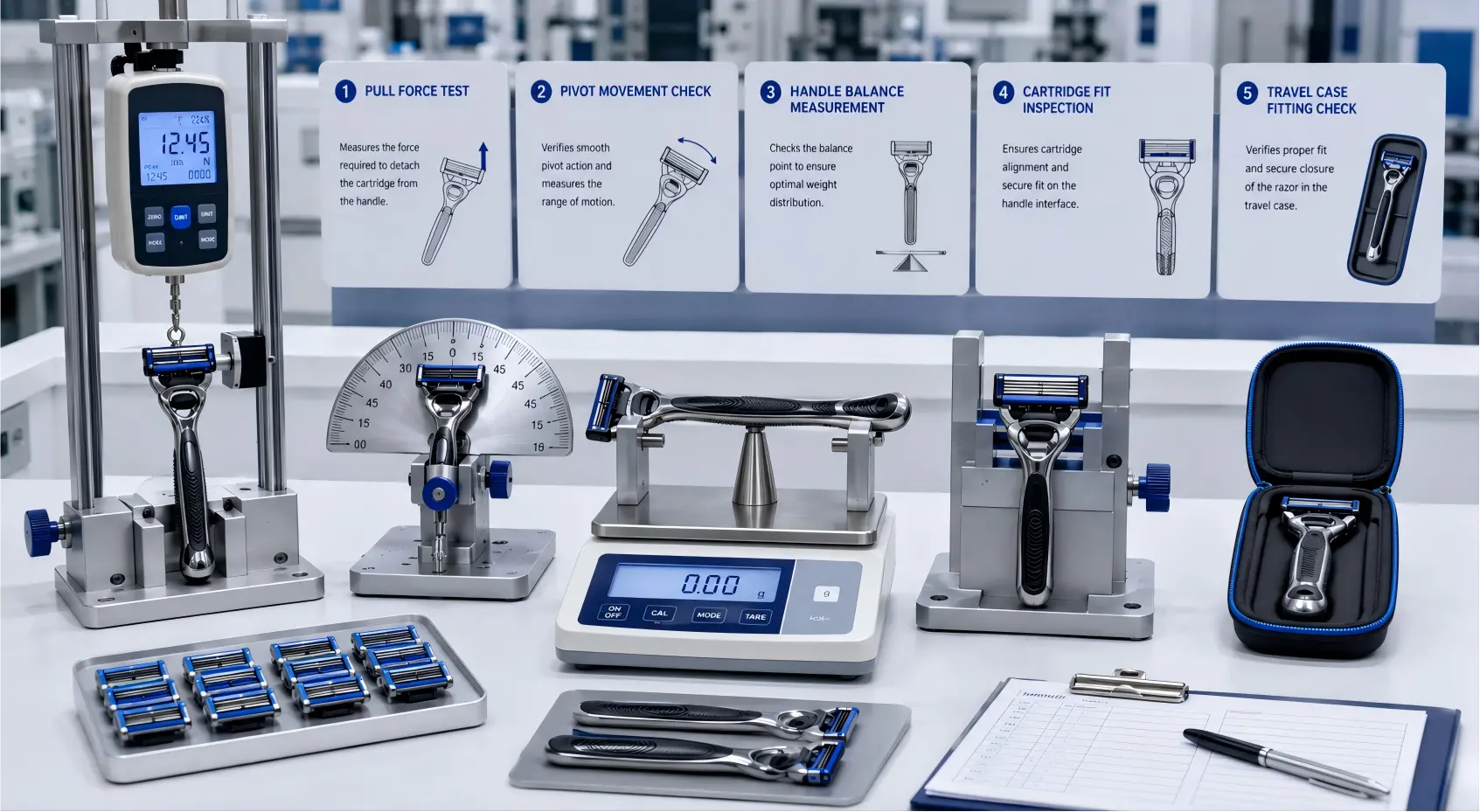
A razor handle should not be evaluated alone. It must work with the blade head, cartridge connector, pivot structure, cap, travel case, and packaging. This complete relationship is the handle-cartridge interface topology. If the interface is weak, the user may feel shaking, poor shaving angle, or unstable blade contact.
For system razors, the handle should support smooth cartridge movement and stable head positioning. For safety razors, the handle thread and head alignment must be accurate. For disposable razors, the neck area must be strong enough to hold the blade head during use and survive packaging pressure. For travel razors, the handle must also fit the case without pushing against the blade area.
Interface Testing Checklist
- Pull force test between handle and cartridge or head assembly.
- Pivot movement check for smooth contour-following performance.
- Drop test observation for cracking, head separation, or handle deformation.
- Case fitting test for travel razor and online retail packaging.
- Carton compression test for export shipping and warehouse stacking.
Ergonomic Design: Grip, Balance, and Control
Ergonomics is important because razors are used on curved skin, often with wet hands, soap, and limited visibility. A handle that looks attractive may still fail if the grip zone is wrong. A handle that is too thin can feel unstable. A handle that is too heavy may not suit travel packs. A handle that is too smooth can increase slipping risk under shaving foam exposure.
Good ergonomic design combines handle length, grip texture, thumb position, weight balance, and head angle. Women’s razors may require better control for legs, underarms, and bikini areas. Men’s razors may require more precision around jawlines and beard edges. Safety razors often depend heavily on handle diameter, weight, and knurling.
Recommended Ergonomic Details
- Handle length: should match the target use, from compact travel size to full-size daily shaving.
- Grip zone width: should support stable finger placement without forcing the hand.
- Surface friction: texture or TPR should improve control in wet use.
- Weight balance: should match blade head size and shaving angle.
- Edge radius: should avoid sharp plastic edges or uncomfortable pressure points.
Customizable OEM and ODM Options for Razor Handles
Handle material is one of the most important Customizable areas in a private label razor project. In an OEM program, buyers may use an existing Manufacturer handle model and customize color, logo, packaging, and blade system. This is practical for faster launch, lower development risk, and easier repeat orders.
In an ODM program, buyers may request a new handle shape, exclusive grip pattern, special material combination, or matching travel case. ODM development requires more engineering time, sampling control, and tooling discussion, but it can help the brand create a more unique product line.
Customizable Handle Elements
- Handle material: PP, ABS, TPR overmolding, metal, or bamboo.
- Color system: solid color, translucent color, soft-touch finish, metallic finish, or natural bamboo tone.
- Logo method: pad printing, hot stamping, laser marking, engraving, or label application.
- Grip design: raised dots, grooves, wave texture, matte area, or TPR insert.
- Packaging format: blister card, paper box, travel case, gift set, display box, or bulk carton.
A professional Supplier should explain which changes are simple OEM adjustments and which changes require ODM tooling, higher MOQ, longer lead time, or additional testing.
Quality Control Standards Buyers Should Request
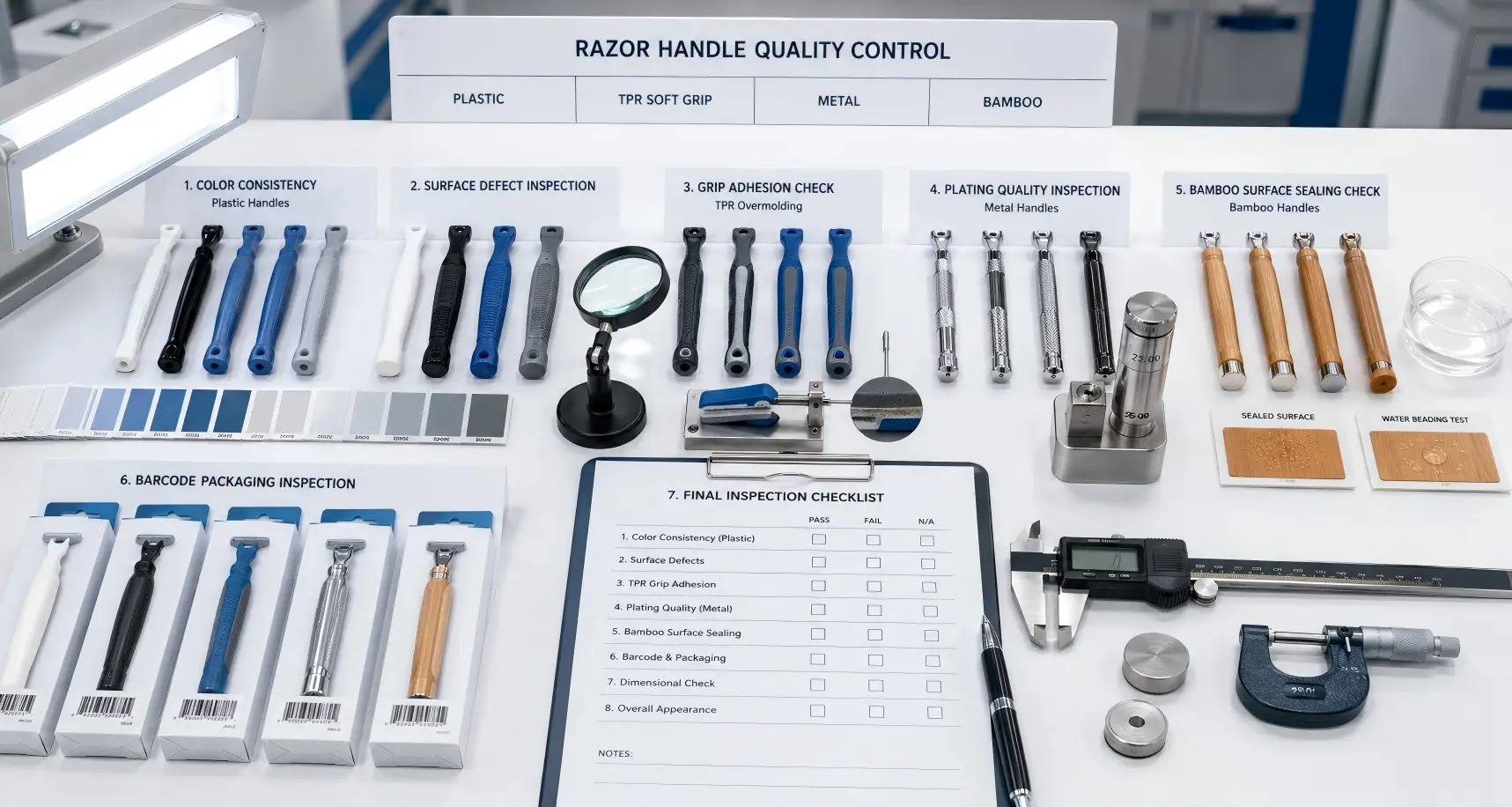
A good-looking sample does not always mean stable mass production. Razor handle quality depends on incoming material control, molding stability, assembly accuracy, surface inspection, packaging protection, and final random inspection. This is especially important for repeat OEM orders, where color drift, surface defects, or grip peeling can damage brand consistency.
For plastic and TPR handles, the Manufacturer should check injection marks, burrs, color difference, deformation, grip adhesion, and assembly strength. For metal handles, the Supplier should inspect plating, corrosion resistance, thread accuracy, and surface scratches. For bamboo handles, inspection should include moisture content, coating uniformity, cracking, natural color tolerance, and interface bonding.
Core Quality Control Nodes
- Incoming material inspection: resin, TPR, metal parts, bamboo blanks, blade parts, and packaging materials.
- Injection molding inspection: handle shape, burrs, sink marks, color consistency, and surface defects.
- Assembly inspection: cartridge fit, head stability, pivot movement, and handle balance.
- Surface inspection: scratches, stains, plating defects, coating defects, or printing errors.
- Packaging inspection: barcode, warning text, carton mark, pack quantity, and export readiness.
- Final random inspection: confirms mass production consistency before shipment.
How to Choose the Right Razor Handle Supplier
The right Supplier should not only ask which material you want. A professional Supplier should ask about sales channel, user group, target price, shaving system, packaging type, and market positioning. These questions decide whether plastic, TPR, metal, or bamboo is the right handle material.
For importers and distributors, the most practical method is to start from the application scenario. If the product is a disposable razor for retail promotion, plastic may be the best choice. If it is a premium women’s razor, ABS with TPR may be better. If it is a safety razor gift set, metal or bamboo may create stronger value. If it is an online travel set, handle size and case fit may matter more than material alone.
Supplier Evaluation Questions
- Can the Manufacturer recommend materials based on application instead of only price?
- Can the Supplier provide Customizable OEM and ODM handle options?
- Can samples be tested in wet bathroom environment and packaging conditions?
- Can the factory control color consistency across repeat orders?
- Can the Supplier explain MOQ, tooling cost, sample lead time, and packaging limits?
- Can the Manufacturer support export packaging, inspection reports, and quality documentation?
Conclusion
Razor handle material affects grip, comfort, cost, branding, and logistics. Plastic, TPR, metal, and bamboo each fit different applications. Contact Haward Razor for Customizable OEM and ODM handle solutions matched to your market, packaging channel, and product positioning.