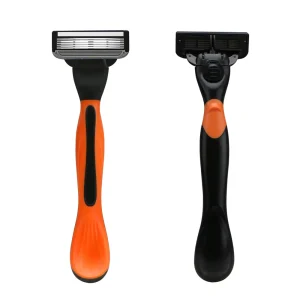
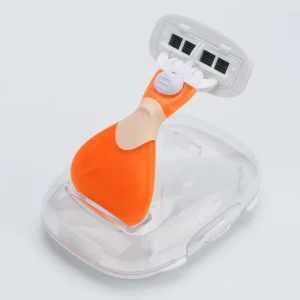
Missing EU Compliance Can Stop a Razor Shipment Before Retail Launch
For European razor buyers, the biggest problem is not only price or blade performance. It is whether the Manufacturer can prepare the right compliance documentation before the goods enter the EU market. A Supplier may promise OEM, ODM, and Customizable packaging, but if the shipment lacks GPSR records, REACH material control, correct labeling, packaging compliance, and traceability files, the buyer may face customs delay, retail rejection, product recall, or financial loss. The solution is to treat certification as a sourcing checkpoint, not a final paperwork request after production.
Ordinary manual razors usually do not need CE marking, but they must meet EU product safety, chemical, packaging, labeling, and traceability requirements. Haward Razor supports buyers with Customizable OEM and ODM razor programs backed by quality control, documentation, and export ready Supplier coordination.
What Certifications Are Actually Required for Razors in the EU?
For most non electric manual razors, there is no single razor specific EU certificate that automatically grants market access. This is where many new importers make a costly mistake. They ask a Supplier for a CE certificate, but ordinary manual razors are generally not in a CE marked product category. CE marking is only used when a product is covered by specific EU harmonized legislation. Applying CE marking to a product that does not require it can create mislabeling risk and regulatory risk.
For razor importers, the more practical question is not whether the product has one certificate, but whether the Manufacturer can provide a complete EU compliance file. This file should show that the razor is safe for consumers, chemically controlled, traceable by batch, correctly labeled, and packed according to European market requirements. A reliable Supplier should understand the difference between voluntary factory certificates, product test reports, and mandatory market access obligations.
In B2B sourcing, certifications should be divided into three categories. The first category is mandatory legal compliance, including GPSR, REACH, SVHC, packaging rules, and labeling requirements. The second category is product specific testing, such as material safety, heavy metals, sharp edge risk review, corrosion resistance, and performance checks. The third category is factory management certification, such as ISO9001 and ISO14001, which helps buyers evaluate the Manufacturer but does not replace product compliance.
Manual Razors Versus Electric Razors
Manual razors and electric razors should not be treated the same. A manual disposable razor, cartridge razor, safety razor, eyebrow razor, or barber razor is usually handled as a general consumer product. An electric shaver or battery powered grooming device may fall under different EU rules, including electrical safety, electromagnetic compatibility, restriction of hazardous substances, and CE marking obligations. Therefore, when sending an RFQ to a Supplier, the buyer must clearly define the razor type.
Practical Classification for Buyers
- Disposable razor: usually general consumer product compliance, GPSR, REACH, labeling, packaging, and traceability.
- Cartridge razor: general consumer product compliance plus stronger refill compatibility and batch consistency control.
- Safety razor: general consumer product compliance plus metal material, coating, corrosion, and blade compatibility control.
- Eyebrow razor or barber razor: general consumer product compliance plus sharp edge safety and packaging warning review.
- Electric shaver: possible CE marking route depending on applicable electrical and electronic regulations.
- Medical razor: possible additional regulatory review depending on medical claims, hospital use, sterile packaging, and tender requirements.
Core EU Compliance Requirements for Manual Razors
A serious European buyer should ask the Manufacturer to prepare a compliance checklist before sampling. This prevents the common problem of approving a beautiful Customizable OEM sample and later discovering that the material, packaging, or labeling cannot meet EU buyer requirements. The right Supplier should discuss compliance during quotation, not after mass production.
General Product Safety Regulation
GPSR is the main safety framework for many consumer products sold in the EU. Manual razors are sharp products used directly on the skin, so safety evaluation should include blade protection, handle strength, cartridge stability, protective cap fitting, user instructions, warning information, and product traceability. The Manufacturer should help the buyer prepare product identification, batch records, responsible economic operator information, and risk control documentation.
For OEM and ODM projects, GPSR preparation becomes more important because a Customizable handle, new packaging, different lubricating strip, or modified blade structure can change the risk profile. A Supplier that only copies old documents from another product creates documentation mismatch risk. The buyer should request a product specific file for each razor model and packaging version.
REACH and SVHC Material Control
REACH is one of the most important chemical compliance areas for razors. A razor can include stainless steel blades, plastic handles, rubber grips, coatings, lubricating strips, adhesives, printing inks, blister packaging, paper cards, and cartons. Any of these materials may create chemical compliance risk if not controlled correctly.
Buyers should ask the Manufacturer for material declarations and, when required, third party test reports covering REACH, SVHC, heavy metals, phthalates, PAHs, nickel release where relevant, and restricted substances based on the exact material composition. A professional Supplier should not give a generic answer. It should identify which parts require testing and which documents are needed for the destination market and retail channel.
Packaging and Packaging Waste Requirements
Razor packaging is a major compliance and commercial issue in Europe. Many razors are sold in blister packs, paper cards, refill packs, gift boxes, cartons, or shelf ready display boxes. The buyer should discuss packaging material, recyclability, labeling, barcode placement, country language needs, carton marks, and retailer packaging standards with the Supplier before artwork approval.
European buyers increasingly request reduced plastic, recyclable paper, FSC style paper sourcing where required by the customer, and efficient carton loading. A capable Manufacturer should provide Customizable packaging options that balance compliance, cost, shelf impact, and logistics protection. Poor packaging control can cause retail rejection, claim cost, transport damage, and brand reputation risk.
Cosmetic Regulation Borderline Issues
Some razors include lubricating strips with aloe, vitamin E, soap, fragrance, or moisturizing claims. If the strip only helps the blade glide during shaving, it may be reviewed as part of the razor function. If the strip is marketed with a primary cosmetic function, the project may require additional review under Cosmetic Regulation EC 1223 2009. This classification should be checked case by case.
For B2B buyers, the practical rule is simple: do not make cosmetic claims casually. Claims such as moisturizing, skin care, soothing, perfuming, antibacterial, or dermatological benefit may create extra claim substantiation risk. The Manufacturer and buyer should agree on claim language before packaging artwork is released.
| Compliance Area | Applies to Manual Razors | Typical Buyer Requirement | Main Risk if Missing |
|---|---|---|---|
| GPSR | Yes | Safety assessment, traceability, warnings, responsible operator details | Product recall, retail rejection, market surveillance action |
| REACH and SVHC | Yes | Material declaration and substance test reports where needed | Chemical compliance failure, customs delay, retailer claim |
| CE Marking | Usually no for ordinary manual razors | Only applicable if the product falls under CE covered legislation | Mislabeling risk, false compliance claim |
| ISO9001 | Factory level, not product approval | Quality management certificate and audit review | Unstable production, quality dispute |
| ISO14001 | Factory level, not product approval | Environmental management evidence | Sustainability audit failure, retailer concern |
| Packaging Rules | Yes | Packaging material review, recycling information, retailer packaging format | Retail delisting, non compliant packaging |
| Cosmetic Regulation EC 1223 2009 | Case by case | Needed if lubricating strip or attached formulation has cosmetic function or claims | Incorrect product classification, claim risk |
Factory Certificates Buyers Should Request from a Razor Manufacturer
Factory certificates do not replace EU product compliance, but they are important procurement tools. They help buyers understand whether the Manufacturer has stable systems, documented processes, and repeatable quality control. For European razor programs, a Supplier with poor factory management may pass one sample but fail during mass production.
ISO9001 Quality Management
ISO9001 is a key certificate for evaluating whether a Manufacturer has a structured quality management system. For razor products, buyers should look beyond the certificate itself. They should check whether the Supplier controls blade incoming inspection, handle injection quality, cartridge assembly, lubricating strip application, packaging inspection, and final AQL review.
A strong OEM and ODM Supplier should be able to show work instructions, inspection records, defect classification, corrective action reports, calibration records, and batch traceability. These records help reduce mass production deviation, quality complaint risk, and repeat order instability.
ISO14001 Environmental Management
ISO14001 is useful for European buyers because retailers increasingly review environmental management, packaging reduction, waste control, and responsible manufacturing. For razors, environmental questions may involve plastic usage, metal waste, packaging material, production waste, and energy awareness. A Supplier with ISO14001 is usually better prepared for sustainability focused buyer audits.
For Customizable packaging, buyers should ask whether the Manufacturer can support paper based options, reduced plastic packaging, recyclable cartons, and more efficient loading plans. This is not only a compliance topic. It also affects freight cost, retail image, and consumer acceptance.
BSCI, SMETA, or Retailer Social Audits
Some European retailers or distributors may ask for social compliance audits such as BSCI, SMETA, or customer specific ethical sourcing audits. These are not universal legal certificates for selling razors, but they may be mandatory for certain retail customers. A buyer should clarify this before selecting a Supplier.
If a Manufacturer cannot pass the required retailer audit, even a compliant product may not be listed. This creates supplier qualification failure and launch delay risk. For private label programs, audit readiness is often as important as sample quality.
Audit Nodes and Documents to Check Before Placing an Order
EU razor sourcing should follow a structured audit path. The buyer should not rely on one certificate or one sales promise. A professional procurement team should check the Manufacturer at company level, factory level, material level, product level, and shipment level. This is the safest way to control supply chain risk.
Before Quotation Approval
Before accepting a price, the buyer should ask the Supplier to confirm the product category, material composition, customization level, destination market, certification scope, MOQ, and testing plan. A vague quotation can become expensive later if testing, packaging, tooling, or documentation costs are excluded.
Before Sample Approval
During sampling, the buyer should lock the golden sample. This sample should include blade count, handle material, logo position, color, lubricating strip, protective cap, packaging artwork, barcode, and carton mark. For OEM and ODM projects, sample approval should be written, not verbal.
Before Mass Production
Before production starts, the Manufacturer should confirm raw material readiness, packaging artwork approval, production schedule, inspection standard, and compliance document responsibility. The buyer should require pre production inspection for first orders or high value Customizable projects.
Before Shipment
Before payment balance or container loading, the buyer should conduct pre shipment inspection. This should verify product quality, quantity, packaging, labeling, carton condition, barcode scanning, shipping marks, and document consistency. Missing this step increases late discovery risk, because defects found after arrival are more expensive to correct.
| Audit Stage | Required Document or Action | Responsible Party | Procurement Purpose |
|---|---|---|---|
| Supplier Screening | Supplier qualification form, business license, factory profile | Buyer and Supplier | Confirm real Manufacturer identity and export capability |
| Factory Review | Factory audit, production line review, QC process review | Buyer, agent, or third party auditor | Reduce supplier fraud risk and production instability |
| Material Control | Material declaration, REACH, SVHC test plan | Manufacturer | Control chemical and material compliance |
| Sample Stage | Golden sample approval, artwork approval, specification sheet | Buyer and Manufacturer | Prevent quality disputes and packaging errors |
| Production Stage | In line inspection, batch record, defect report | Manufacturer QC team | Detect problems before full order completion |
| Shipment Stage | Pre shipment inspection, packing list, commercial invoice, test reports | Buyer, Supplier, or third party inspector | Reduce customs delay, retail rejection, and claim risk |
| After Sales | Corrective action report, batch traceability, claim handling file | Manufacturer and buyer | Improve future orders and reduce repeat defects |
How to Build a Compliant OEM or ODM Razor Program for Europe
A compliant razor program starts long before mass production. The buyer and Manufacturer should connect product development with EU regulatory thinking from the first RFQ. This is especially important for Customizable OEM and ODM programs, because changing the handle, blade system, coating, strip formula, or packaging can also change the compliance workload.
Step by Step Compliance Workflow
- Classify the product as disposable razor, cartridge razor, safety razor, eyebrow razor, barber razor, medical razor, or electric shaver.
- Confirm whether CE marking is applicable. For ordinary manual razors, do not request CE marking unless a specific regulation requires it.
- Define the destination countries and retail channel requirements.
- Prepare a complete RFQ with product structure, material, packaging, compliance request, volume, and launch timeline.
- Ask the Supplier for ISO9001, ISO14001, factory audit readiness, and product testing capability.
- Review GPSR, REACH, SVHC, packaging, labeling, and traceability requirements before sample approval.
- Check whether any lubricating strip or attached formula may trigger Cosmetic Regulation EC 1223 2009 review.
- Approve a golden sample and written specification sheet.
- Conduct pre production inspection, in line inspection, and pre shipment inspection for first orders.
- Maintain batch files, test reports, shipment documents, and claim records for traceability.
What a Reliable Supplier Should Provide
A capable razor Manufacturer should provide more than samples and price. For European importers, the Supplier should support product specification, quality control, material declaration, packaging guidance, sample records, export documents, and inspection coordination. This is what separates a professional OEM and ODM Manufacturer from a simple trading Supplier.
Recommended Supplier Document Package
- Company profile and factory production capability.
- ISO9001 and ISO14001 certificates where available.
- Product specification sheet for each razor model.
- Material list covering blade, handle, rubber, coating, ink, adhesive, strip, and packaging.
- REACH and SVHC test reports or testing plan where required.
- GPSR related safety and traceability records.
- Packaging artwork approval file and labeling checklist.
- AQL inspection standard and final inspection report.
- Batch number, production date, carton mark, and shipment document file.
- Corrective action process for quality claims.
Why Haward Razor Is Suitable for EU Compliance Focused Buyers
Haward Razor is a professional razor Manufacturer serving global buyers with OEM and ODM shaving product development. For European importers, distributors, private label brands, and retail buyers, this is important because EU market entry requires both product capability and documentation discipline. A Supplier must understand not only how to produce razors, but also how to support a compliant sourcing process.
Haward Razor offers multiple razor categories, including system razors and blades, safety razors and blades, disposable razors, medical razors, eyebrow razors, barber razors, women razors, and shaving accessories. This allows buyers to build Customizable product lines for different European channels while using a more coordinated supply chain approach.
OEM and ODM Development Support
For OEM buyers, Haward Razor can support logo, color, packaging artwork, retail display format, carton marks, and product line planning. For ODM buyers, the company can support deeper product development, including handle design, blade count selection, material choice, surface finishing, lubricating strip direction, and packaging structure. This matters because compliance must follow the exact final design.
Quality System and Export Readiness
Haward Razor communicates factory management through ISO9001 quality assurance and ISO14001 environmental management. These systems help support stable production, quality records, and export documentation. For European buyers, this is a useful foundation for supplier qualification, factory audit, sample approval, and long term category development.
Commercial Risk Reduction
A strong Supplier should help buyers reduce compliance failure, shipment delay, retail rejection, quality claim, and product recall. Haward Razor is suitable for buyers who want a Manufacturer that can discuss product design, packaging, documentation, inspection, and supply planning together. This is the correct procurement mindset for the EU market.
Common Mistakes Buyers Should Avoid
Many razor importers lose time and money because they misunderstand EU certification. The most common mistake is asking for a CE certificate for ordinary manual razors without checking whether CE marking is legally applicable. Another mistake is treating ISO9001 as product approval. A factory certificate is useful, but it does not prove that every razor model meets EU requirements.
- Do not assume every EU product needs CE marking.
- Do not accept generic REACH reports without checking material relevance.
- Do not approve packaging artwork before reviewing warning, language, barcode, and responsible operator information.
- Do not use cosmetic claims on lubricating strips without classification review.
- Do not place a mass order before golden sample approval.
- Do not skip pre shipment inspection for the first order.
- Do not choose a Supplier only by unit price if compliance documents are weak.
- Do not treat a trading company as a Manufacturer without factory verification.
In Europe, a cheaper quotation can become more expensive than a qualified Supplier if the order fails inspection, misses launch timing, or triggers a retailer claim. The best sourcing decision is based on total risk control, not only the first unit cost.
Final Procurement Recommendation
To sell razors in the EU, choose a Manufacturer that understands product safety, REACH, packaging, labeling, and audit control. Contact Haward Razor to develop a Customizable OEM or ODM razor program with a reliable Supplier and export ready compliance support.