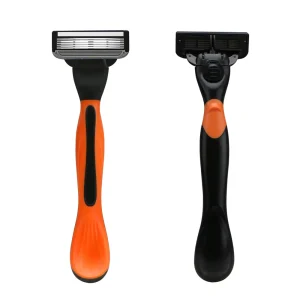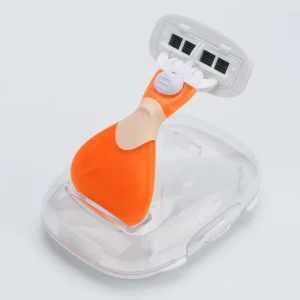
A Brand Owner can pay every tooling invoice yet discover, during a supply interruption, that the mold cannot be released. The Supplier may claim payment covered development only, inserts belong to a third-party toolmaker, or unpaid storage and maintenance charges block transfer. Production stops while launch dates, retailer commitments, and replacement inventory keep moving. The crisis worsens when no asset register, mold photographs, shot history, maintenance record, or accepted transfer procedure exists. Without those documents, the buyer cannot prove razor mold ownership, evaluate remaining tool life, or restart production at another Manufacturer. A strong custom razor tooling agreement prevents this dependency by separating physical title, design rights, permitted use, custody, maintenance, insurance, modification approval, and OEM tooling transfer from purchase-order terms.
A qualified Razor Supplier must document the owner, title-transfer milestone, asset ID, location, permitted use, maintenance duty, shot count, insurance, audit access, modification approval and release procedure. Haward Razor aligns these controls with Customizable OEM and ODM project milestones so tooling remains traceable from development through transfer.
The following sections reveal what procurement directors, legal teams and engineering wholesalers rarely see in a quotation: how tooling labels, invoices, cavity records, maintenance logs, subcontractor acknowledgments, insurance schedules and exit files determine whether a paid mold is genuinely portable—or only apparently owned.
Separate the Mold, Product Design and Manufacturing Know-How
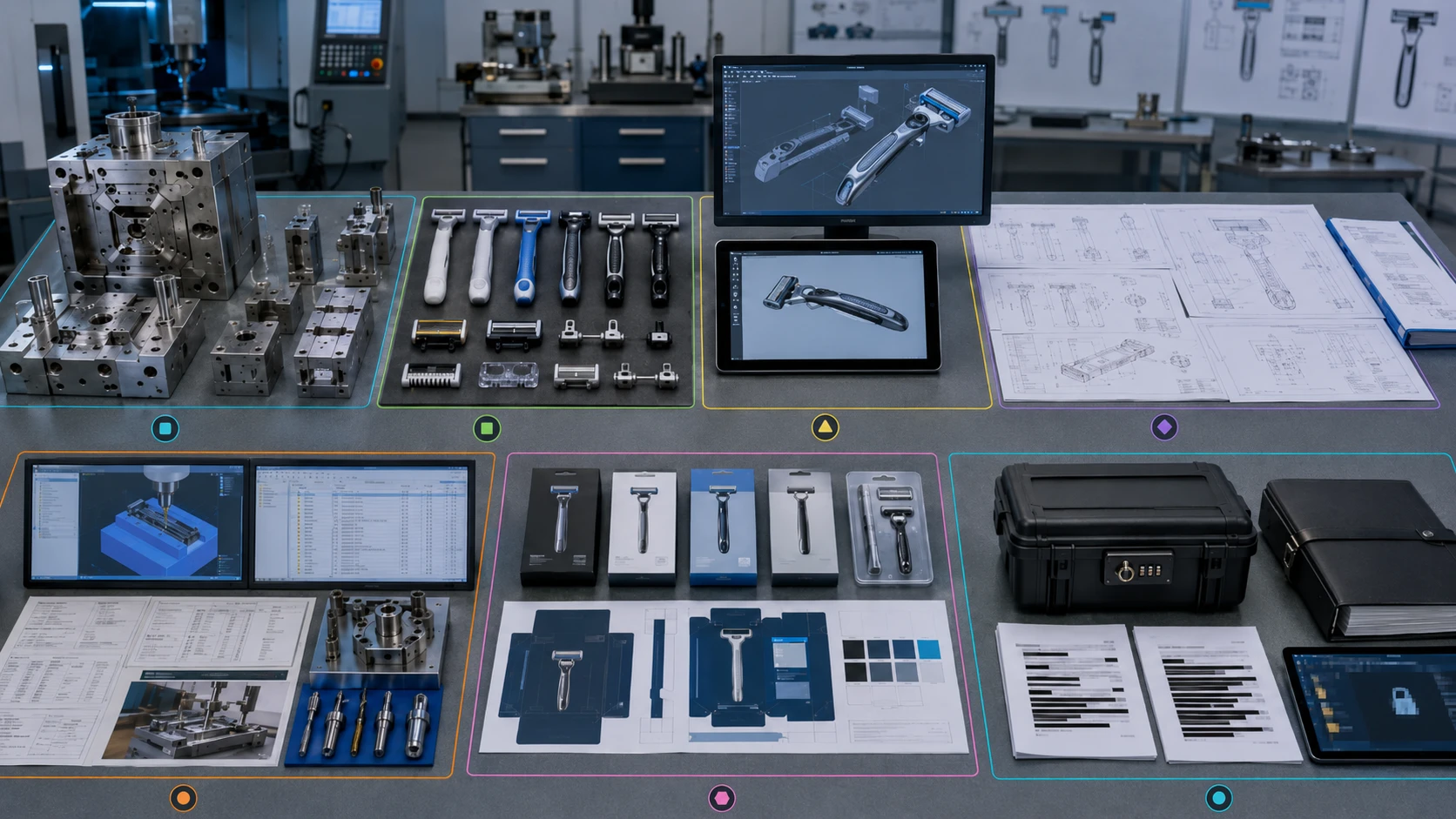
The first contract mistake is treating “tooling” as one asset. A Customizable Razor project normally contains several physical and intangible layers. Ownership of one layer does not automatically transfer the others.
- Physical tooling: mold base, cavities, cores, inserts, sliders, lifters, ejector components, hot-runner equipment, cooling fittings and dedicated fixtures.
- Product intellectual property: Razor appearance, functional geometry, drawings, registered designs, patents, trademarks and packaging artwork.
- Manufacturing data: 3D mold files, 2D tool drawings, steel specifications, electrode files, CNC programs, process windows and inspection programs.
- Supplier know-how: general molding methods, machine settings, standard mold-base designs and pre-existing technology used across multiple projects.
- Project improvements: revised gate positions, cooling changes, insert modifications and engineering solutions developed during sampling.
WIPO distinguishes an IP assignment, which transfers ownership, from an IP license, which authorizes specified use while the original owner retains title. The contract should apply the same clarity to each Razor asset. Paying for a mold does not necessarily assign the product design, and owning the design does not automatically give the buyer every toolmaker program.
The legal team should create separate definitions for Buyer-Owned Tooling, Supplier Background IP, Project IP and Manufacturing Know-How. This protects the Brand Owner without demanding unrelated proprietary knowledge from the Manufacturer.
State Exactly When Injection Mold Ownership Transfers

A tooling invoice marked “mold fee” is weak ownership evidence. The custom razor tooling agreement should say whether title passes upon full payment, a milestone payment, tool acceptance, or another defined event. Risk of physical loss may remain with the Supplier even after injection mold ownership transfers to the buyer.
Do not rely on EXW, FOB or another trade term to establish title. ICC guidance confirms that Incoterms® 2020 allocate delivery obligations, costs and risk but do not determine when ownership passes. Tooling title therefore needs an independent clause.
The ownership clause should identify:
- The buyer’s exact legal entity and registered address.
- The Supplier, molding factory and any third-party toolmaker holding the asset.
- The ownership milestone and evidence produced at that milestone.
- Whether taxes, design fees, trials, modifications and spare inserts are included.
- Whether the Manufacturer retains any lien, retention right or security interest, subject to governing law.
- Whether ownership is free of third-party claims and subcontractor charges.
Require the Supplier to obtain a written acknowledgment from each subcontracted toolmaker. It should confirm the buyer’s title, the storage location, release obligation and absence of unauthorized encumbrances. Otherwise, a Brand Owner may hold an agreement with one Supplier while the physical mold is controlled by another company.
Create an Asset Schedule That Can Prove Razor Mold Ownership
Every tooling agreement should include an asset schedule. This is the document that connects the commercial payment to a specific physical mold. Generic descriptions such as “Razor handle mold” are inadequate when a Manufacturer operates several similar tools.
| Asset Record Field | Required Evidence | Commercial Purpose |
|---|---|---|
| Unique tooling ID | Permanent plate, engraving or durable asset tag | Prevents substitution or identity disputes |
| Tool description | Razor component name, drawing number, revision and cavitation | Links the mold to the approved product |
| Physical configuration | Mold dimensions, weight, steel grade, runner type and connector standard | Supports storage, insurance and transfer planning |
| Included accessories | Spare inserts, electrodes, fixtures, gauges and dedicated controllers | Prevents incomplete handover |
| Current location | Factory name, address, building and storage position | Confirms who has custody |
| Ownership evidence | Paid invoice, title certificate and subcontractor acknowledgment | Creates a complete documentary chain |
| Condition baseline | Dated photographs, inspection report and cumulative shot count | Supports maintenance and damage claims |
Update the schedule whenever a mold receives a new insert, cavity change, major repair or location change. The buyer should receive the current version after each approved modification and during every scheduled tooling audit.
Accept the Tool Before Releasing the Final Payment
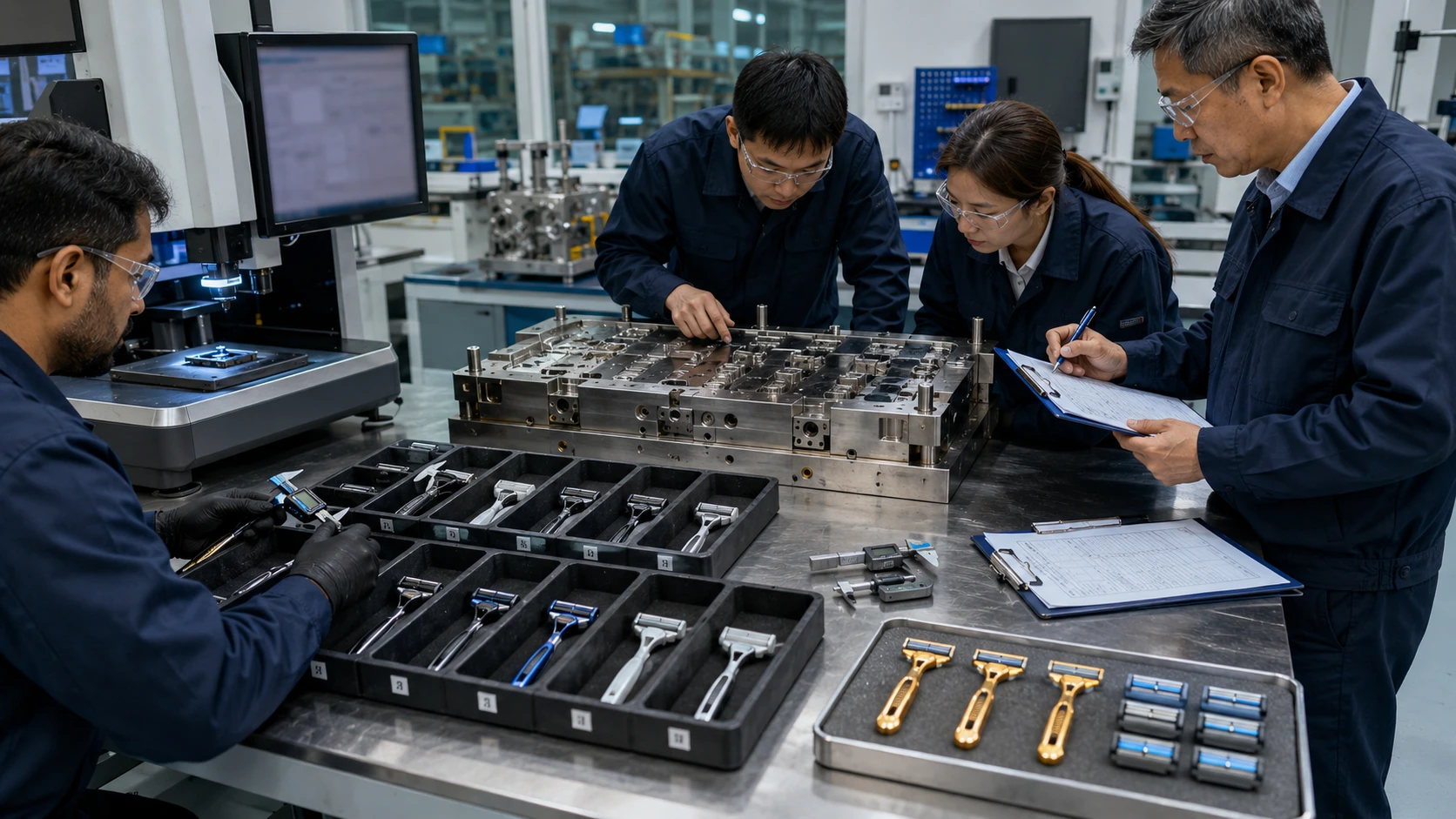
Title and technical acceptance are separate decisions. A Brand Owner may legally own a mold that still fails to produce approved Razor components. The payment schedule should therefore retain commercial leverage until an agreed tool acceptance test is completed.
A practical milestone structure may include:
- Design review: approve parting line, gate, venting, cooling, ejection, steel, cavitation and target molding machine.
- T0 trial: confirm basic filling, ejection and tool movement.
- T1/T2 correction trials: close dimensional, cosmetic and assembly gaps.
- Engineering validation: verify Razor fit, blade-unit engagement, pivot movement, handle strength or packaging compatibility.
- Pilot production: demonstrate a stable process over an agreed continuous run.
- Final acceptance: approve samples, dimensional report, process parameters, tooling documents and open-issue closure.
For critical cartridge housings, guards, caps and pivot components, include cavity-level dimensional data. A pooled report can hide one unstable cavity. The acceptance package should identify the measuring equipment and laboratory used. If external dimensional verification is required, confirm the scope and validity of the laboratory’s ISO/IEC 17025 accreditation.
Final payment should not become due merely because the mold physically exists. Link it to the defined acceptance package and signed release by authorized engineering and procurement representatives.
Control Storage, Identification and Unauthorized Use
After acceptance, the Supplier normally retains custody because the mold is needed for ongoing OEM or ODM production. Custody should be treated as a documented service, not an informal favor.
The Manufacturer should store buyer-owned molds in a controlled area protected from water, corrosion, collision, dust and unauthorized removal. Each mold should display the buyer name, tooling ID, component number and ownership status. Where brand confidentiality matters, use a coded asset ID while maintaining the owner mapping in a restricted register.
The agreement should prohibit the Supplier from using the mold, duplicate inserts, rejected components or project drawings for another customer. It should also prohibit subcontracting, relocation, lending, benchmarking and photography without written approval.
WIPO notes that trade-secret protection generally depends on commercially valuable information remaining confidential and being protected through reasonable measures. Apply that principle to Razor CAD files, mold-flow data, process settings, specifications and Customizable product features through:
- Non-disclosure agreements with employees, toolmakers and sub-suppliers.
- Role-based digital access and download records.
- Controlled visitor photography.
- Confidential file markings and revision control.
- Deletion or return obligations after project termination.
Require Shot Records and Cavity-Level Production History
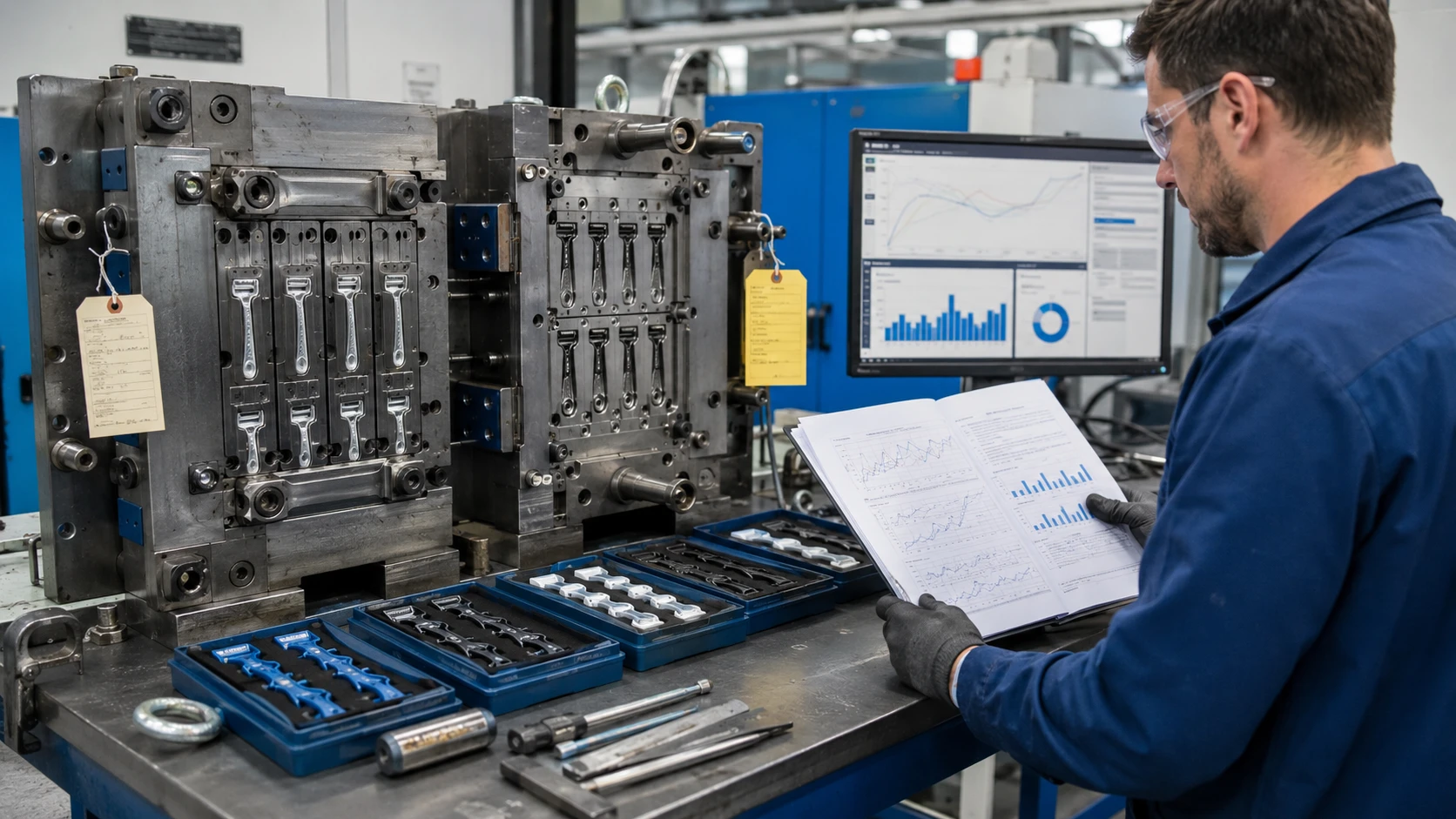
A mold’s remaining value cannot be evaluated without a reliable shot record. Purchase quantity is not an adequate substitute. One molding cycle may produce several parts, and trials, rejects, setup shots and unauthorized production may not appear on commercial invoices.
The Supplier should record, by mold and production run:
- Opening and closing cumulative shot count.
- Date, purchase order, production batch and molding machine.
- Resin grade, color masterbatch and recycled-content status where applicable.
- Active cavity count and any blocked cavity.
- Setup, trial, accepted and rejected quantities.
- Abnormal stops, flash, sticking, short shots and dimensional drift.
- Maintenance or repair completed before the next production run.
The buyer should receive a summarized tooling statement at an agreed frequency, such as quarterly or after every production order. The initial maintenance interval should come from the tool design, resin, component geometry and toolmaker recommendation—not a generic “one million shots” claim.
Shot data also exposes a commercial risk. If cumulative cycles increase faster than buyer-authorized production, procurement has evidence to investigate unauthorized mold use, excessive setup waste or weak record control.
Convert Maintenance into a Contracted Responsibility
A Supplier saying “we maintain the mold free of charge” leaves too many questions unanswered. The custom razor tooling agreement should distinguish routine preventive maintenance, normal wear replacement, buyer-requested modification, accident repair and end-of-life refurbishment.
| Tooling Event | Typical Responsibility to Negotiate | Required Approval or Evidence |
|---|---|---|
| Cleaning, lubrication and corrosion protection | Supplier operating responsibility | Maintenance checklist and completion date |
| Inspection at planned shot interval | Supplier performs; cost allocation stated in contract | Condition report, photographs and next-service forecast |
| Replacement of expected wear items | Defined by approved spare-parts list | Part number, reason, cost and replaced-part disposition |
| Repair after negligent handling | Normally the responsible custodian | Incident report and root-cause analysis |
| Buyer-requested design modification | Buyer after approved quotation | Engineering change notice and validated trial |
| Major end-of-life refurbishment | Negotiated after remaining-life assessment | Technical proposal, forecast life and approval |
Do not let the Supplier grind, weld, re-machine or replace a cavity insert without written authorization when the work may affect product dimensions, appearance or tool life. Emergency work should follow a predefined exception process with photographs, risk assessment and rapid buyer approval.
Protect Every Modification with Engineering Change Control
Tool modification creates a second ownership question: who owns the revised inserts, updated drawings and improvement data? The agreement should answer this before the first change request.
Use a controlled Engineering Change Request and Engineering Change Notice process. Each request should identify the reason, affected components, drawing revision, mold areas, cost, lead time, validation plan and effect on remaining tool life. No verbal approval from a salesperson should authorize irreversible steel removal.
After modification, require:
- Before-and-after photographs and dimensional references.
- Updated 2D and 3D tooling files where included in the ownership scope.
- Revised asset schedule and insert list.
- Updated shot baseline if major components were renewed.
- Trial samples and cavity-level inspection results.
- Assembly, function and packaging revalidation where affected.
- Written disposition of removed inserts.
The Supplier must not scrap the previous inserts automatically. The buyer may require return, witnessed destruction or secure retention for a defined period. This matters when a modification fails and the previous approved Razor geometry must be restored.
Verify Insurance, Damage Reporting and Business Continuity

Legal ownership does not protect a mold from fire, flood, theft, crane damage, rust or factory closure. The agreement should assign risk of loss while in custody and require the Supplier to maintain appropriate property coverage or disclose that the tool is uninsured.
Request a certificate of insurance or other evidence showing the insured entity, location, policy period, relevant coverage and material exclusions. Do not assume the Supplier’s general property policy automatically covers customer-owned tooling at full replacement value or at a subcontractor’s premises.
The contract should define:
- The declared replacement value and how it is updated.
- Whether tools at third-party locations are covered.
- The incident-notification deadline.
- Evidence preservation and joint inspection rights.
- Who manages the insurance claim.
- How insurance proceeds are applied to repair or replacement.
- Responsibility for expedited retooling and production interruption.
Also include the mold in the Supplier’s business continuity plan. A backup molding machine is useful only if the mold, controller, connectors, approved resin, process file and qualified operators remain available.
Define OEM Tooling Transfer Before the Relationship Deteriorates

An OEM tooling transfer clause is most valuable when drafted during a cooperative negotiation. Waiting until quality, payment or delivery disputes arise makes every missing detail a bargaining point.
Define transfer triggers such as project completion, prolonged inactivity, repeated quality failure, insolvency, factory closure, material breach or termination. State the notice period and the Supplier’s permitted response. The buyer should pay undisputed production invoices, but the contract should prevent unrelated commercial disputes from becoming an indefinite tooling hold, subject to applicable law.
The transfer package should include:
- The mold, inserts, fixtures, gauges, controllers and dedicated spare parts.
- Latest asset register, photographs and condition report.
- Cumulative shot history and maintenance records.
- Approved part drawings and mold drawings within the agreed ownership scope.
- Process sheets, resin data and validated molding window.
- Latest cavity inspection and approved golden samples.
- Open issues, known damage and recommended next maintenance.
State who disconnects, cleans, protects, packs, loads and insures the mold. Define a specific handover location and transport term, but remember that the transport term does not replace the ownership clause.
Plan the Physical Transfer as an Engineering Project
A transferred injection mold may not run immediately at another Manufacturer. Machine platen size, tie-bar spacing, clamping arrangement, nozzle radius, locating ring, ejection interface, electrical connectors, hot-runner controller, cooling connections and lifting points may differ.
Before release, the receiving Supplier should complete a machine compatibility review. The parties should agree whether transfer means delivery of the existing mold only or includes adaptation to the receiving factory.
For international transfer, prepare the customs description, tariff classification, declared value, country of origin, ownership documents and reason for shipment. Permanent transfer, temporary import, repair and return can receive different customs treatment. Obtain destination-specific broker advice before dispatch.
Heavy molds normally require a protected crate, corrosion prevention, blocked moving components, lifting instructions and verified gross weight. If raw-wood crates or dunnage are used in international trade, check whether ISPM 15 treatment and marking apply. The IPPC explains that the standard addresses phytosanitary risks associated with raw-wood packaging.
Document the mold condition before loading and after receipt. A signed handover report should distinguish pre-existing wear from transit damage.
Audit the Tooling Controls, Not Just the Finished Razors
A quality-system certificate does not prove that a specific buyer-owned mold is properly identified, maintained or transferable. ISO 9001 includes controls related to property belonging to customers or external providers, but procurement should verify implementation at the actual site.
IATF 16949 practices from the automotive sector provide a useful benchmark for tooling identification, maintenance and customer-property discipline, although IATF certification is not a normal universal requirement for a Razor Manufacturer. Likewise, GRS or BRC scope may support other product or facility claims but does not establish razor mold ownership.
Add tooling controls to the Supplier audit:
- Select asset IDs from the register and physically locate the tools.
- Match plates, photographs, invoices and subcontractor records.
- Compare shot records with purchase orders and finished quantities.
- Review overdue preventive maintenance and inactive tools.
- Inspect corrosion protection, storage racks and lifting safety.
- Sample engineering changes for evidence of buyer approval.
- Verify access controls for drawings and mold files.
- Review insurance coverage and business-continuity actions.
A practical baseline is an annual tooling audit for active strategic projects, with higher frequency after major modifications, relocation or repeated maintenance failures.
Negotiate a Balanced Clause Matrix
The strongest custom razor tooling agreement protects the buyer while recognizing legitimate Supplier costs. Maintenance, warehousing, transfer labor and modification work should be priced transparently rather than hidden behind unclear ownership restrictions.
| Clause | Buyer Protection | Balanced Supplier Protection |
|---|---|---|
| Title | Clear ownership milestone and freedom from third-party claims | Payment milestone defined before title transfers |
| Permitted use | No production for unauthorized customers | Right to use only for approved buyer orders and trials |
| Storage | Protected and identifiable custody | Published fee after an agreed inactive period |
| Maintenance | Shot-based records and approval for major repair | Buyer pays approved upgrades and abnormal wear outside Supplier responsibility |
| Audit | Reasonable access to tool and records | Advance notice, confidentiality and normal working hours |
| Transfer | Defined release deadline and complete documentation | Buyer pays agreed packing and freight charges |
| Scrapping | No destruction without written authorization | Storage may be charged after extended inactivity and notice |
Example time periods—such as 30 days for transfer preparation, 180 days before inactive-storage charges, or annual audits—should be negotiated for the project. They are commercial drafting values, not universal legal standards.
Prepare Remedies and Dispute Resolution Before Signing
A contract should define what happens when the Supplier fails to identify, maintain, insure or release the tooling. Possible remedies include corrective action, repair, replacement, reimbursement of documented transfer costs, injunctive relief where available and agreed damages that remain enforceable under the governing law.
Do not write an excessive penalty without legal review. A clause that appears commercially powerful may be unenforceable in the relevant jurisdiction. The legal team should specify governing law, notice method, contract language, court jurisdiction or arbitration, interim relief and enforcement location.
ICC publishes model arbitration wording for international contracts. If the parties select ICC arbitration, they should also specify the seat, language and number of arbitrators. Arbitration language does not correct an incomplete asset schedule, so operational evidence remains essential.
Use an escalation sequence before formal proceedings:
- Operational review between Supplier and buyer project managers.
- Written corrective-action request with evidence and deadline.
- Executive commercial negotiation.
- Mediation if agreed.
- Arbitration or litigation under the selected clause.
This article provides a procurement framework, not jurisdiction-specific legal advice. Local counsel should adapt the final agreement to property, insolvency, lien, tax, customs and enforcement rules.
References and Further Reading
- WIPO – IP Assignment and Licensing: distinction between transferring ownership and granting permission to use intellectual property.
- WIPO – Trade Secrets: confidentiality, commercial value and reasonable protection measures.
- ISO/TC 176 – ISO 9001 Documented Information Guidance: records concerning customer property, traceability and control.
- ICC Academy – Incoterms and Passing of Title: explains that Incoterms do not determine ownership transfer.
- ICC – Standard Arbitration Clause: model language and drafting considerations for international disputes.
- IPPC – ISPM 15: requirements for raw-wood packaging used in international trade.
Protect the Asset Before Approving the Tool Order
Send Haward Razor your drawings, cavitation plan, payment schedule, target volumes and transfer requirements. Our OEM and ODM team can prepare a Customizable tooling-control schedule for procurement and legal review before mold development begins, helping protect razor mold ownership throughout the project lifecycle.