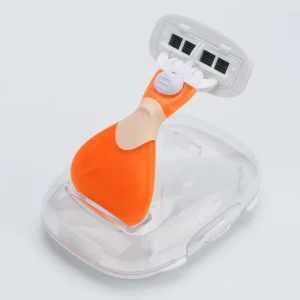
A Razor purchase can look profitable at quotation stage and still destroy margin after tooling, packaging revisions, rejected lots, freight surcharges, and missed launches are added. Buyers often negotiate only the unit price, while the Manufacturer protects itself through high MOQ, short price validity, rigid deposits, and undefined change fees. The pressure grows when a late shipment leaves retail shelves empty or a blade-alignment defect forces reinspection. That creates stockout risk, inventory exposure, cash-flow pressure, and product liability. Better terms come from replacing one-dimensional bargaining with an exchange of volume, forecast visibility, technical clarity, payment security, quality gates, and shared risk. An OEM or ODM Supplier should help both parties make those trade-offs measurable before the purchase order is released.
A qualified OEM Razor Supplier must offer transparent cost drivers, proven process control, clear MOQ and lead times, verifiable compliance documents, written quality criteria, tooling and IP terms, traceability, change control, and workable remedies. Haward Razor supports Customizable OEM and ODM programs through platform selection, specification review, packaging development, pilot approval, and commercial term alignment.
For importers, purchasing teams, engineering wholesalers, and private-label brands, the sections below reveal the negotiation points that experienced Razor buyers settle before discussing the final cent. They show how to convert forecasts, specifications, audit evidence, and launch discipline into better price, payment, capacity, quality, and risk terms.
1. Build a Total-Cost Baseline Before Asking for a Lower Price

The first negotiation advantage is knowing what the quotation includes. A low FOB unit price may exclude molds, color matching, logo fixtures, artwork changes, refill trays, export cartons, testing, inspection, palletization, or bank charges. Compare every Manufacturer on the same total landed cost basis, not on an isolated Razor price.
Request an itemized commercial sheet covering the cartridge, handle, lubricating strip, protective cap, retail pack, master carton, development fees, tooling, and logistics assumptions. The Supplier may not disclose its confidential margin, but it should explain which specifications drive cost. Blade count, metal handle weight, rubber overmolding, special coatings, small print runs, and complex blister structures can materially change the cost base.
- Separate one-time non-recurring engineering from recurring unit cost;
- Confirm whether the quote is EXW, FCA, FOB, CIF, DAP, or DDP and name the exact place;
- Identify currency, tax treatment, pallet standard, carton quantity, and loading assumptions;
- Calculate landed cost under both forecast volume and realistic downside volume;
- Model the cost of defects, rework, delayed delivery, and obsolete packaging.
This baseline lets the buyer negotiate the largest economic drivers instead of forcing an unsustainable headline discount.
2. Trade Forecast Visibility for MOQ and Volume-Based Pricing
Minimum order quantity (MOQ) is not arbitrary. It may be driven by resin color batches, blade or strip procurement, printing setup, assembly changeover, or packaging conversion. Ask the OEM Manufacturer to explain the limiting operation for each SKU. Then negotiate the real constraint rather than demanding one MOQ across unrelated components.
A strong approach is to offer a rolling forecast, annual volume estimate, and a defined firm-order window in exchange for consolidated component purchasing. Several Customizable Razor colors may share one cartridge and carton structure while using different labels or sleeves. This can reduce component fragmentation even if finished-goods quantities remain smaller. Haward Razor’s 2026 catalog includes men’s and women’s system razors, compatible multi-blade platforms, disposables, mini formats, and facial tools; buyers can use a proven ODM platform to avoid unnecessary unique tooling and component MOQs. The periods below are illustrative negotiation starting points, not universal commercial standards.

| Negotiation Variable | Buyer Commitment | Supplier Concession to Request | Commercial Protection |
|---|---|---|---|
| Annual volume | Non-binding 12-month forecast plus quarterly refresh | Tiered price at cumulative volume levels | No retroactive surcharge if forecast is identified as non-binding |
| Firm window | Confirmed purchase orders for the next 8-12 weeks | Reserved production capacity and stable lead time | Written rules for rescheduling and cancellation |
| Shared components | Common cartridge, resin, tray, or carton across SKUs | Lower component MOQ and combined purchasing | Approved BOM and compatibility control |
| Launch order | Limited SKU count and fast sample approval | Pilot quantity below normal mass-production MOQ | Pilot price separated from repeat-order price |
Never promise volume merely to secure a price. Use conditional tiers so both parties know what happens if demand is above or below plan.
3. Negotiate Payment Terms as a Risk-Sharing Mechanism

Payment should reflect relationship maturity, development exposure, and evidence of performance. A new Supplier may reasonably request a deposit because it must buy blades, resin, packaging, or metal parts before production. The buyer, however, should avoid paying almost the entire order before objective quality and shipment evidence exists.
A practical structure links money to milestones. Tooling can be paid after design approval, mold completion, and accepted samples rather than in one undifferentiated transfer. Production payment can be split between deposit and balance after pre-shipment inspection, with the exact release documents stated. For an established relationship, buyers may request a smaller deposit, a short open-account period, or a revolving arrangement. For larger or unfamiliar cross-border transactions, a letter of credit can reduce payment risk when documentary requirements are carefully drafted. A documentary collection is less protective because banks exchange documents but do not guarantee payment.
- Match the deposit to the Supplier’s actual committed materials;
- Define the inspection or document trigger for the balance;
- Allocate bank charges and currency-conversion fees;
- State how disputed, rejected, or short-shipped quantities affect payment;
- Review improved terms after three or another agreed number of compliant, on-time orders.
The goal is not to shift all credit risk to the Manufacturer, but to prevent payment from getting ahead of verified value.
4. Replace Vague Price Validity with a Transparent Adjustment Formula
Long-term price certainty is valuable, but a fixed price without assumptions can fail when steel, resin, zinc alloy, paperboard, labor, exchange rates, or freight move sharply. The better solution is a defined price-adjustment mechanism. Ask the Supplier to identify the main variable inputs, the baseline date, review frequency, trigger threshold, supporting evidence, and whether decreases pass through as well as increases.
For example, the parties may hold the OEM Razor price for an agreed period, then review only if a named cost basket changes beyond a negotiated band. Any revision should apply prospectively to new purchase orders, not to accepted orders already in production. Cap the frequency of changes and require written notice before the next order deadline. Packaging redesigns, blade upgrades, special pigments, or expedited freight should be quoted as separate changes rather than hidden in a general increase.
- Record the quotation’s price-validity period;
- Use a consistent currency and named reference date;
- Require cost evidence for extraordinary adjustments;
- Include a symmetric reduction mechanism where appropriate;
- Prohibit unilateral changes after purchase-order acceptance.
This approach protects supply continuity while reducing the risk of opportunistic repricing.
5. Freeze the Specification Before Negotiating the Final Cent

A Razor is only comparable when the specifications are comparable. Two five-blade products may differ in blade material, edge treatment, blade geometry, lubricating-strip formula, pivot response, handle construction, cartridge openness, and packaging protection. If the request for quotation is vague, every Supplier will price a different product and later changes will create scope creep.
Issue a controlled specification pack with the approved BOM, drawings, performance criteria, packaging artwork, color limits, logo method, reference sample, and market requirements. Mark which features are fixed and which are Customizable. For an ODM project, clarify the boundaries of the existing platform. For an original OEM design, define prototype rounds, engineering deliverables, mold-flow review, validation responsibilities, and the process for approving deviations.
Use a Negotiation Freeze List
- Blade count, source specification, coating or treatment, alignment, and retention method;
- Cartridge housing, guard, cap, pivot, connector, and refill compatibility;
- Handle resin, metal grade, rubber area, weight, finish, and color boundary;
- Lubricating-strip material, dimensions, location, and approved claims;
- Primary pack, refill count, barcode, case pack, and shipping carton;
- Golden sample, revision number, and authorized approvers.
Once these items are frozen, the Manufacturer can offer a price that is both sharper and more defensible.
6. Put Tooling Ownership, Exclusivity, and Confidentiality in Writing

Tooling disputes usually begin because the quotation says “mold fee” but does not define ownership, custody, maintenance, useful life, modification rights, or transfer. Before paying, identify every mold, fixture, gauge, printing plate, welding tool, and packaging die funded by the buyer. State whether the asset is buyer-owned, Supplier-owned, or subject to shared investment.
For a Customizable handle or original OEM Razor system, the agreement should define who owns the drawings, industrial design, connector geometry, prototypes, and improvements. A non-disclosure agreement (NDA) helps protect confidential information, but the manufacturing agreement should also restrict unauthorized use, disclosure, subcontracting, photography, sample display, and production for third parties. Exclusivity must identify territory, channel, product definition, term, minimum purchases, and consequences if the buyer misses commitments.
- Apply a permanent asset ID and maintain a tooling register;
- Define preventive maintenance and repair-cost allocation;
- Require written permission before relocation or subcontracted use;
- Specify access, audit, storage, and end-of-project transfer rights;
- Record what happens to tooling after inactivity or contract termination.
These terms reduce IP leakage, supplier lock-in, and future launch delays.
7. Convert Quality Expectations into Measurable Release Terms

“Good quality” is not a contract term. The buyer and Manufacturer should agree on defect definitions, test methods, sampling, records, and remedies before mass production. Start with a golden sample and controlled drawings, but do not rely on appearance alone. Critical Razor characteristics can include blade alignment and retention, exposed sharp edges outside the intended cutting zone, connector security, pivot function, cap retention, logo position, package sealing, and pack count.
ISO 2859-1:2026 provides AQL-indexed acceptance-sampling schemes for inspection by attributes, but the parties must still choose inspection level, defect classes, and acceptance rules. A sampling plan cannot replace stable manufacturing controls. Ask the Supplier for a quality plan that covers incoming quality control (IQC), first-article approval, in-process quality control (IPQC), final quality control (FQC), lot traceability, nonconforming-product control, and corrective and preventive action (CAPA).
Negotiate the practical remedies:
- Who pays for reinspection when a lot fails;
- Whether defects are sorted, reworked, replaced, credited, or destroyed;
- How urgent air freight is allocated after a Supplier-caused delay;
- How complaint samples and production records are preserved;
- Response deadlines for containment, root cause, and CAPA closure.
Clear remedies make the quoted price meaningful because quality failure costs are no longer invisible.
8. Verify Certifications and Market Compliance by Scope, Not Logo

A certificate logo on a presentation does not prove that the relevant site, process, material, or finished Razor is covered. Request the current certificate, issuing body, site address, scope, validity dates, and any transaction or material documentation required for the specific claim. Haward Razor’s catalog refers to GRS and BRC qualifications; a buyer should still verify the current documents and confirm how each applies to the selected SKU and packaging.
For recycled-material claims, Global Recycled Standard (GRS) involves third-party certification and chain-of-custody requirements. It should not be treated as a generic environmental label that automatically covers every product. Likewise, ISO 9001:2015 certification indicates a quality-management framework, not automatic approval of a specific blade, cartridge, or lot.
Market responsibilities must also be allocated. Under the EU General Product Safety Regulation (GPSR), manufacturer and other economic-operator obligations include safety, risk analysis, technical documentation, identification, traceability, and corrective action. The commercial agreement should state who supplies materials declarations, test reports, warning content, product and batch identification, responsible-person data, and recall cooperation. Never accept vague promises for regulatory compliance without a document list and approval owner.
9. Negotiate Lead Time, Capacity, and Incoterms as One System

A promise of “30 days” is incomplete unless the starting event and exclusions are defined. Does lead time begin after deposit, artwork approval, raw-material availability, or golden-sample signoff? Does it include packaging production, inspection, booking, and customs documentation? Ask the Supplier to divide the timeline into engineering, material procurement, production, packing, inspection, and dispatch.
Use a capacity agreement for seasonal or promotional Razor programs. The buyer can provide a rolling forecast and firm window; the Manufacturer can reserve a specified weekly or monthly output. Define the response if approvals are late, demand exceeds the forecast, or a key raw material becomes unavailable. Critical components may justify an agreed safety-stock or vendor-managed inventory arrangement, but ownership, shelf life, consumption, and cancellation liability must be clear.
Use the named rule and place under Incoterms 2020. Incoterms clarify delivery tasks, costs, and risk, but they do not replace product specifications, payment terms, title transfer, warranty, or dispute provisions. Confirm:
- Booking responsibility and freight-quote validity;
- Export and import clearance obligations;
- Cargo insurance responsibility and coverage;
- Risk-transfer point and document package;
- Rules for split shipments, rollover, demurrage, and storage.
This prevents a unit-price saving from being erased by logistics ambiguity.
10. Use a Pilot Order and Milestone-Based Term Sheet

Do not attempt to settle every long-term concession before the Supplier has demonstrated production performance. A pilot order creates evidence for both sides. It should use production-intent materials, normal equipment, actual packaging, and the proposed inspection plan. The pilot may carry a higher unit cost, but that cost should not silently become the repeat-order price.
| Commercial Gate | Required Evidence | Buyer Release | Term Earned or Confirmed |
|---|---|---|---|
| Design freeze | Approved drawings, BOM, claims, artwork, and ownership schedule | Tooling authorization | Tooling price, ownership, timing, and sample rounds |
| First article | Dimensional, functional, cosmetic, and compatibility results | Golden-sample approval | Mass-production specification and change-control baseline |
| Pilot run | Yield, capability, inspection, traceability, and packaging records | Initial production order | Repeat-order MOQ, price tier, and lead time |
| Three compliant orders | On-time delivery, acceptance, CAPA, and service performance | Forecast commitment or larger allocation | Improved deposit, credit period, capacity, or rebate |
Use a one-page commercial term sheet before drafting the full purchase agreement. It should record SKU scope, prices, MOQ, forecast assumptions, payment, lead time, Incoterm, tooling, quality, warranty, confidentiality, and dispute path. This exposes contradictions while changes are still inexpensive.
11. Negotiate Remedies, Change Control, and Exit Rights Before Trouble
Good relationships still need written rules for bad outcomes. Define what constitutes late delivery, chronic quality failure, unauthorized material substitution, confidentiality breach, or repeated documentation error. Avoid an unrealistic penalty that no Supplier will accept or that local law may not enforce. Instead, negotiate operational remedies tied to measurable loss: expedited replacement, rework, credit, sorting cost, or recovery of agreed direct expenses.
A formal engineering change notice (ECN) process should cover blades, steel source, resin, pigment, rubber, lubricant, strip, adhesive, coating, tooling cavity, sub-Supplier, packaging substrate, process location, and test method. No change should enter production without documented impact review and buyer approval when the specification requires it.
Also plan for business continuity:
- Notification period for component discontinuation or site transfer;
- Last-time-buy rights for a discontinued OEM or ODM platform;
- Return or transfer of buyer-owned tools and confidential files;
- Access to quality and traceability records for an agreed retention period;
- Termination rights after defined, uncured material breach;
- A governing-law and dispute-resolution clause reviewed by qualified counsel.
Exit rights are not hostile. They reduce business interruption and make long-term cooperation more credible.
12. Turn Better Performance into Better Terms over Time

The first agreement should include a review mechanism. A Manufacturer can offer better pricing and payment when the buyer provides accurate forecasts, stable specifications, timely approvals, and repeatable order patterns. The buyer can grant more volume when the Supplier demonstrates consistent quality, responsiveness, and delivery. This is a balanced negotiation flywheel, not a one-time price battle.
Review the relationship quarterly or after an agreed number of orders using a simple scorecard:
- On-time in-full (OTIF) delivery;
- Incoming acceptance and first-pass yield;
- Complaint rate by SKU and production lot;
- CAPA response and closure time;
- Forecast accuracy and buyer approval turnaround;
- Cost-reduction projects and value-engineering results;
- Inventory exposure for unique materials and packaging;
- Communication speed and document accuracy.
Connect performance bands to future terms. Strong results may unlock lower deposits, longer price validity, reduced MOQ, reserved capacity, annual rebates, or joint Customizable development. Weak results should trigger corrective action before new volume is awarded. This method gives both the OEM Supplier and Razor buyer a measurable reason to improve.
Negotiate a Partnership That Protects Margin and Supply
The best Razor terms balance price, cash flow, quality, flexibility, compliance, and continuity. Send Haward Razor your target product, annual forecast, markets, Customizable requirements, packaging, and delivery plan to receive a structured OEM or ODM proposal and begin a fact-based commercial review.