A medical distributor may receive a request for a hospital prep razor without a procedure description, approved removal method, or packaging specification. The kit assembler then selects a disposable razor, only to discover that the receiving facility requires clipping, prohibits shaving, or needs documentation the product cannot support. The result is avoidable stock rejection, artwork changes, and delayed kit release. A lower unit price cannot resolve an application mismatch. Buyers need to establish whether a single-use manual razor belongs in the workflow before discussing blade geometry or carton quantities. Start with the facility’s infection-control policy, the intended procedure, and destination classification. Then translate the authorized application into a controlled product specification, packaging requirement, and purchasing decision before issuing purchase orders.
Haward Razor is a specialist Manufacturer for Customizable OEM and ODM manual razor programs. Where expressly authorized, specify one razor, one patient, one procedure, zero reuse, approved dimensions, protective packaging, and lot traceability. Facility infection-control policy and destination classification determine suitability. These requirements do not make a manual razor appropriate for routine surgical preparation.
Medical distributors, institutional buyers, kit assemblers, importers, wholesalers, and specialist retailers can use the following framework to qualify demand before sourcing. Published guidance and clearly identified procurement examples show how to align product selection, packaging, documentation, and ordering controls. The examples are illustrative workflows, not verified Haward customer case studies.
Establish the Clinical Policy Before Specifying the Component
Routine Surgical Hair Removal Is Not a Default Razor Application
The first question for a single use medical razor supplier should be: does the facility authorize this removal method for this procedure? A purchasing description alone cannot answer it.
The WHO surgical-site infection guideline, section 4.6, recommends leaving hair in place or using clippers when removal is absolutely necessary. It strongly discourages shaving before surgery and in the operating room. NICE NG125, recommendations 1.2.4–1.2.5, also rejects routine hair removal and specifies electric clippers with a single-use head when removal is required.
- No removal required: exclude hair-removal tools from that preparation step.
- Clipping required: source the approved clipper system and compatible head.
- Manual shaving requested: obtain the applicable written protocol and clinical approval before evaluating a razor.
A Manufacturer must not present a pre procedure razor as a substitute for a clipper merely because it is disposable, compact, or inexpensive. This article addresses procurement specifications, not patient-specific clinical decisions.
Separate Limited Procedure Exceptions from General Purchasing Permission
A Narrow Guideline Discussion Is Not a Universal Indication
The SHEA/IDSA/APIC 2022 Update, published in 2023, generally recommends avoiding unnecessary hair removal and using clipping or an appropriate depilatory method when necessary. It also discusses possible razor use in a limited subset of procedures, including procedures involving male genitalia. This is a narrower qualification than the WHO and NICE recommendations; it must not be converted into a blanket product claim.
For a distributor, the practical response is to request a procedure-specific decision from the facility’s clinical and infection-control leads. Confirm the authorized device, labeling, user group, location, and disposal route. A Supplier cannot resolve differing guidance by selecting whichever statement supports a sale.
Likewise, a non-surgical preparation request is not automatically suitable for a disposable medical razor. The relevant procedure or equipment instructions must support the method. An institution’s ordinary personal-grooming kit is a separate application and should not be relabeled as a surgical preparation kit. No Haward platform is assigned a clinical indication here.
Compare Kit Scenarios Before Calculating Annual Demand

Use Component Counts to Prevent Automatic Inclusion
These illustrative procurement counts are not clinical instructions, validated performance data, or standard pack quantities. The authorized workflow determines the bill of materials.
| Application scenario | Manual razors per kit | Alternative component | Purchasing condition |
|---|---|---|---|
| Surgical preparation with no hair removal required | 0 | None for hair removal | Do not add a razor as a routine accessory |
| Surgical preparation governed by a clipping protocol | 0 | 1 compatible single-use clipper head, if kit supplied | Confirm compatibility with the facility’s clipper |
| Explicitly authorized, procedure-specific manual preparation | 1, as an approved BOM example | No automatic substitution | Written protocol, intended-use review, and product qualification |
| Institutional personal-grooming pack | 1, if specified | None unless separately requested | Separate SKU and labeling; not a surgical-preparation claim |
For example, assume a distributor assembles 10,000 kits monthly, but only 2,000 kits belong to a specifically authorized manual-preparation program. At one approved razor per kit, component demand is 2,000 razors, before separately justified inventory allowances. Applying the component to all kits would create 8,000 unnecessary inclusions.
The single use medical razor supplier should quote against the approved kit variant, not the facility’s total procedure count.
Evaluate Haward Platforms Through Drawings and Samples

Reference D135, D151, and D251 as Manual Prep-Razor Platforms Only
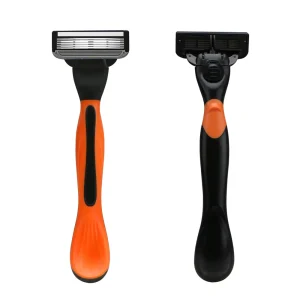
Haward’s 2026 catalog identifies D135, D151, and D251. For this sourcing exercise, treat them only as manual prep-razor platforms for technical review. Their appearance in a catalog does not establish sterilization compatibility, destination authorization, suitability for a particular procedure, or clinical performance. Obtain current drawings and model-specific documentation before approval.
The engineering comparison should include:
- Head envelope: overall width, depth, and access clearance in millimeters.
- Blade architecture: blade count, retention method, edge alignment, and guard geometry.
- Handle: overall length, grip cross-section, surface texture, and orientation cues.
- Protection: blade-cover arrangement and resistance to damage inside the proposed pack.
- Materials: declared resin, blade alloy, coatings, colorants, and any skin-contact additives.
Do not rank these models by unverified sharpness, safety, or suitability for anatomical sites. A women’s shaving razor, system razor, or eyebrow razor is not an equivalent hospital prep razor merely because it removes hair. Product architecture and the authorized application must be assessed together.
Translate Gloved Handling into Measurable Engineering Checks
Specify a Bench Evaluation Before Any Authorized User Evaluation
Human-factors review should examine how an operator identifies, opens, grips, and disposes of the component. A long handle may provide clearance but require a larger pouch. A textured grip may improve purchase in a simulation while making a label harder to apply. Evaluate these tradeoffs with the intended gloves and packaging.
The following is an illustrative buyer-defined bench screen, not a medical standard or a Haward performance claim:
- Sample set: 30 assemblies, with 10 from each of 3 production lots.
- Dimensional record: head width, handle length, and packed envelope in millimeters, using approved drawing tolerances.
- Handling conditions: dry gloves and water-dampened gloves, with blade edges protected and no patient contact.
- Functional observations: opening errors, grip changes, detached parts, and unintended contact with the protected head.
- Disposition: investigate every observed blade-retention or unintended-exposure event before proceeding.
A pilot screen does not establish a population defect rate. The Manufacturer and buyer must separately define production sampling, acceptance limits, test fixtures, and escalation rules. Customizable geometry requires renewed evaluation rather than approval by visual similarity.
Distinguish Individual Packaging from a Validated Sterile Product
Define the Supply State Before Choosing the Pouch
Single-use, individually packed, and sterile describe different attributes. An individual wrapper does not demonstrate sterility. A non-sterile component cannot be placed in a sterile-field workflow merely because its pouch looks similar to other medical packs.
For a pre procedure razor, the RFQ must identify the required supply state and who is responsible for any subsequent processing. Do not assume D135, D151, or D251 tolerates steam, ethylene oxide, or irradiation without product-specific evidence.
- Non-sterile supply: define protective packaging, cleanliness requirements, labeling, and permitted kit placement.
- Sterile supply: require a supported sterilization process, compatible materials, packaging validation, and justified shelf life.
- Kit sterilization: evaluate the complete assembled configuration and its processing responsibilities.
ISO 11607-1 addresses packaging materials and systems intended to maintain the sterility of terminally sterilized medical devices. Citing it does not certify a product. A kit assembler should obtain the applicable evidence from its Supplier and processing partners before approving sterile artwork or an expiry claim.
Resolve Destination Classification and Material Evidence Before Artwork
Medical Terminology Does Not Establish Market Authorization
A single use medical razor supplier must distinguish a commercial product description from a regulatory determination. In the United States, the FDA classification database lists surgical razors under product code LWK, regulation 21 CFR 878.4800, Class I. This entry does not establish the status of any Haward model or authorize every proposed use.
For each destination, the buyer’s regulatory team should confirm intended purpose, classification, applicable obligations, responsible parties, and labeling. Registration, listing, or a quality-system certificate must not be described as product approval or clinical endorsement.
Material documentation also needs to match the finished configuration. FDA’s biocompatibility framework uses a risk-based assessment of body contact. A raw-resin declaration alone does not resolve the effects of coatings, processing residues, colorants, or subsequent sterilization.
Before releasing a disposable medical razor label, confirm the evidence required for its actual contact conditions. Avoid unsupported statements such as infection prevention, atraumatic preparation, hypoallergenic performance, or suitability for all skin types. OEM artwork must remain within the documented intended purpose.
Control Kit Assembly, Traceability, and Customization Together

Make Every Component Change Visible to the Kit Assembler
A technically acceptable razor can still fail kit integration if its cover detaches during handling, its pouch crowds a sealing area, or its label becomes unreadable after packing. Use actual packaging samples to assess fit and access before committing to production quantities.
For an OEM or ODM program, the assembly specification should define:
- Component count: one approved razor per designated kit variant, where specified.
- Identification: model, drawing revision, component lot, and finished-kit batch linkage.
- Pack arrangement: measured component envelope and clearance from seal areas.
- Inspection: correct SKU, intact protection, readable identification, and documented release.
- Disposal instructions: the facility-approved route consistent with applicable local requirements.
Customizable color, logo, pack format, or handle detail remains subject to technical and regulatory review. Color coding must not replace written identification. Require advance notification before the Manufacturer changes resin, blade material, coating, tooling, protective packaging, or a processing partner.
Maintain a quality agreement linking complaints and nonconformities to affected component lots and kit batches. A Supplier substitution should trigger review, not automatic acceptance based on price or dimensions alone.
Release the Purchase Order Only After a Documented Pilot
Separate Procurement Acceptance from Clinical Authorization
Use a staged release: first confirm the permitted application, then review documents, inspect samples, and run a packaging-line pilot. Any clinical evaluation requires the facility’s own authorization and governance; a procurement trial is not a clinical study.
A buyer-defined pilot might assemble 100 kits using the proposed production packaging. Record component-count errors, damaged protection, seal interference, assembly time, and traceability completeness. These are operational observations, not evidence of patient benefit or validated long-term package performance. Transport, aging, and sterile-barrier qualification remain separate where applicable.
Send the prospective single use medical razor supplier a consolidated RFQ covering:
- Destination market and authorized procedure or non-clinical use.
- Facility protocol reference and required supply state.
- Selected platform, approved drawing, and material-document requirements.
- Kit layout, packaging quantities, label languages, and traceability fields.
- Forecast, delivery schedule, acceptance plan, and change-notification expectations.
The final quotation should separate existing-platform supply, Customizable OEM packaging, and ODM development requiring additional tooling or verification. Compare documented scope before comparing unit prices.
Source the Approved Application, Then the Razor
Send Haward your destination market, facility protocol, intended application, packaging state, and forecast to discuss D135, D151, or D251 manual prep-razor platforms. Suitability depends on facility infection-control policy, destination classification, and product-specific evidence. Request an OEM or ODM specification review without assuming clinical benefits or universal surgical suitability.