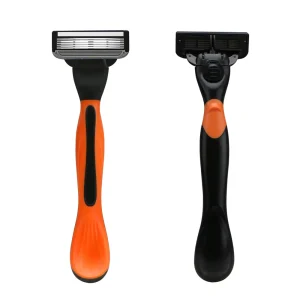
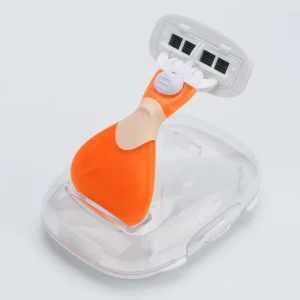
A new personal care brand can approve attractive colors, add several blade counts, and still build the wrong assortment. The problem is usually not a lack of products. It is a lack of architecture. When every SKU uses a different cartridge, handle, package, and Supplier process, tooling cost rises, forecasts fragment, MOQs create slow inventory, and replacement cartridges become confusing. The risk becomes worse across wet bathrooms, travel bags, retail shelves, e-commerce parcel networks, and humid warehouses, where each product faces different functional stress. Launching without a clear good-better-best ladder can leave the brand with overlapping items but no strong entry product. The solution is a scenario-led, platform-based plan that connects consumer jobs, price points, reusable interfaces, packaging channels, quality controls, and staged OEM or ODM investment.
For most new brands, start with 4-6 launch SKUs: one hero system razor, one refill, one value disposable, one travel or women’s format, and one facial-care tool. Haward Razor is a highly specialized vertical Manufacturer that plans Customizable OEM and ODM lines around shared platforms, validated ergonomics, channel packaging, and controlled expansion.
Retailers, importers, wholesalers, and distributors should continue with the framework below. It uses practical product examples, development targets, and channel scenarios to show how a razor assortment can match real use conditions while controlling MOQ, tooling, inventory, compliance, and Supplier risk.
1. Plan Around Consumer Jobs, Not Blade Count Alone

Blade count is visible and easy to market, but it is not a complete product strategy. A daily facial shaver, a women’s body razor, a compact travel razor, an eyebrow tool, and a traditional safety razor solve different jobs. Start by defining the body area, hair type, shaving frequency, user skill, price expectation, and storage condition. Then select the cartridge, guard, pivot, handle, lubrication, and package.
For manual products, the user-side electrical architecture is intentionally simple: no battery, charging port, motor, low-voltage PCB, electromagnetic compatibility requirement, or charger dependency. This supports travel convenience and reduces failure modes. It does not remove mechanical risk. A product still faces wet hands, soap contamination, hard-water residue, repeated wet-dry cycles, high bathroom humidity, and enclosed-case storage.
A useful job map should separate at least five occasions:
- Frequent men’s facial shaving with controlled pivot response and fast rinsing;
- Women’s body shaving with a broader comfort structure and secure wet grip;
- Travel use with a compact handle, protected head, drainage, and low pack volume;
- Eyebrow or facial detailing requiring visibility, precision, and a safety guard;
- Entry-price disposable use where simplicity, pack count, and cost-per-unit dominate.
This segmentation gives the Manufacturer an engineering brief instead of a vague request for “a premium razor.”
2. Build a Good-Better-Best Assortment with Clear SKU Roles
A new brand should not launch every available format. Each SKU needs a role: acquisition, margin, refill retention, travel convenience, or category expansion. A disciplined launch commonly uses one entry disposable, one hero system handle, a compatible refill pack, and one audience-specific extension. A sixth SKU is justified only when it reaches a genuinely different occasion.
The table below gives illustrative development starting points, not universal standards. Final parameters require benchmark testing and market validation.

| Application Scenario | Recommended Product Architecture | Technical Starting Parameters | Commercial Role | Launch Priority |
|---|---|---|---|---|
| Daily facial system | Reusable handle plus replaceable cartridge | 3 or 5 blades, pivoting head, lubricating strip, rinse-through rear structure | Hero product and refill retention | 1 |
| Women’s body shaving | Curved multi-blade system with moisture surround | 5 or 6 blades, wider comfort geometry, anti-slip grip, protected storage | Audience expansion and premium margin | 2-3 |
| Value disposable | Fixed or pivoting one-piece razor | 2 or 3 blades, simple grip texture, 3-10 count retail pack | Trial, promotion, and price entry | 2 |
| Travel or gym | Mini handle with ventilated protective case | Protected blade edge, drainage path, compact pack, case closure-cycle test | Online bundle and impulse purchase | 3-4 |
| Eyebrow and facial detail | Single guarded blade or reusable detail handle | Safety guard, high blade visibility, cap retention, short or long refill option | Low-cost category entry and cross-sell | 3-5 |
| Traditional shaving | Double-edge safety razor | Zinc-alloy head with aluminum, brass, or bamboo handle; controlled assembly fit | Premium niche and gifting | 5-6 |
Haward Razor’s current catalog supports this ladder with women’s five- and six-blade systems, men’s three-, five-, and six-blade platforms, mini razors, disposable ranges, facial razors, eyebrow tools, and double-edge safety razors. The correct Supplier proposal should narrow these options to a coherent launch set.
3. Use a Shared-Platform Topology to Control Cost and Inventory

The most efficient new line uses a hub-and-spoke product topology. The hub is a validated cartridge interface or common component family. The spokes are handles, colors, refill counts, packs, and channel bundles. This permits visible differentiation without multiplying every hidden component.
For example, one compatible men’s cartridge family can support an entry plastic-and-rubber handle, a premium metal handle, and several refill packs. A women’s platform can use the same core blade technology while changing the comfort surround, handle geometry, and color system. Haward’s catalog also identifies three-, five-, and six-blade cartridges that can be paired with compatible handles in one system range. Compatibility must be confirmed by drawing revision and physical testing; it should never be assumed from appearance.
Freeze these interfaces before artwork:
- Cartridge-to-handle connection geometry and release direction;
- Pivot travel, return behavior, and interference clearances;
- Refill tray pocket dimensions and orientation;
- Protective cap or case engagement features;
- Shared color masterbatch and approved resin specifications;
- GTIN allocation by sellable trade item and pack level.
This topology reduces tooling duplication, simplifies forecasting, and lets the brand add a new handle or bundle without rebuilding the entire system.
4. Engineer Ergonomics for Wet Bathrooms, Travel, and Detail Work

Ergonomics must match the movement. Facial shaving uses short controlled strokes and frequent angle changes. Body shaving often uses longer reaches over curved areas. Eyebrow work requires visibility near the blade and low rotational bulk. Safety razors need stable finger placement because the user controls the shaving angle directly.
The primary environmental challenge is the water-soap-skin interface. A glossy dry sample may become difficult to control after exposure to foam or oil. Grip ribs, soft-touch zones, handle balance, neck clearance, and cross-section should therefore be tested with wet hands rather than approved from a rendering.
Recommended Human-Factors Validation
- Evaluate at least two hand-size groups and both dominant-hand orientations;
- Run dry, water-wet, and shaving-product-contaminated grip trials;
- Perform an internal 1.0 m multi-orientation drop sequence on capped and uncapped samples;
- Cycle the pivot, release button, and travel-case closure through a project-defined life target;
- Check access around the nose, jaw, ankle, knee, and brow as applicable;
- Record slips, unintended head release, hot spots, reach failures, and cleaning difficulty.
These are proposed development conditions, not regulatory limits. A capable OEM or ODM Supplier should convert observed user failures into measurable critical-to-quality characteristics before pilot production.
5. Match Packaging Architecture to Retail, E-Commerce, and Refill Behavior

Packaging is part of the product line, not a final decoration step. A blister card can provide strong product visibility and theft resistance for retail, while a carton can provide more communication space and improved stacking. E-commerce needs edge protection, blade containment, barcode readability, and resistance to parcel vibration and drops. Travel products benefit from a reusable case, but the case needs drainage and secure closure.
The channel network can be treated as a retail shelf → distribution case → warehouse pallet topology for store programs, and a product pack → fulfillment overpack → parcel carrier → consumer topology for online orders. Each path produces different compression, vibration, impact, humidity, and scanning risks.
- Assign a unique GTIN to each sellable configuration that is priced or ordered separately;
- Reserve barcode quiet zones and verify UPC/EAN scan performance on the final printed substrate;
- Use ISTA 3A as a relevant reference for individual parcel shipments up to 70 kg when that distribution path applies;
- Define damage as bent cards, open seals, exposed blades, loose cartridges, unreadable barcodes, or cosmetic scuffing;
- Confirm refill-count claims and tray orientation through line-clearance checks.
Do not create a unique pack structure for every color. Use shared dielines where channel requirements and product protection permit.
6. Choose OEM or ODM Depth According to Brand Risk and Timing

An ODM platform is usually the safest first stage. The brand selects an existing validated razor architecture and customizes handle color, logo, soft grip, lubricating-strip option, cartridge count, and packaging. This lowers tooling exposure and shortens the route to a pilot order. The trade-off is that deep mechanical differentiation may be limited.
Original OEM development is justified when the intended benefit depends on a new connector, handle geometry, guard, cartridge housing, open-back flow path, or packaging mechanism. It requires drawings, tolerance analysis, prototypes, mold-flow review, tooling, fixtures, pilot builds, and a formal engineering change process.
A practical staged investment plan is:
- Stage 1: branded packaging and approved colorways on an existing platform;
- Stage 2: Customizable handle surface, logo method, grip insert, and exclusive bundle;
- Stage 3: dedicated handle tooling while keeping a proven cartridge interface;
- Stage 4: original cartridge or system development after demand is proven.
Ask the Manufacturer to quote each stage separately, including MOQ, tooling ownership, sample rounds, lead time, validation, and change costs. This prevents the brand from funding complexity before the sales model is stable.
7. Connect the Product Line to a Controlled Manufacturing System

A broad catalog is useful only if the factory can control the underlying processes. The production network for manual razors may include injection-molding press → blade welding or retention → cartridge assembly → lubricating-strip installation → handle assembly → laser marking or pad printing → vision inspection → PLC-controlled packaging line. Although the final product is manual, the production environment contains high-speed actuators, ultrasonic energy, laser equipment, machine-vision lighting, sensors, and automated interlocks.
New brands should ask the Supplier to identify common and unique process steps for every SKU. Common steps improve purchasing leverage and quality learning. Unique steps create separate failure modes, fixtures, spare parts, and training needs.
Minimum Pilot-Run Control Plan
- Approved BOM, drawings, artwork, golden samples, and cavity identification;
- Blade alignment, retention, guard condition, lubricating-strip location, and pivot checks;
- Wet-grip, rinseability, cap retention, case closure, and handle-connection tests;
- Color boundary, logo position, barcode grade, pack count, and seal verification;
- Lot traceability from incoming blade and resin through final packed cartons;
- Written approval before resin, coating, blade, strip, pigment, or packaging changes.
This converts a visually Customizable assortment into a repeatable manufacturing system.
8. Design Compliance and Claims Before the First Purchase Order

Regulatory scope depends on the market, product, materials, intended use, and claims. In the EU, the General Product Safety Regulation creates a broad safety and traceability framework for non-food consumer products, including online sales. Packaging placed on the EU market must also be reviewed against the applicable timing and requirements of Regulation (EU) 2025/40. In the United States, a normal grooming statement and a treatment or dermabrasion-type claim can lead to different regulatory questions, so facial-tool claims must be reviewed before publication.
Build a market file for each product family containing risk assessment, specifications, test reports, materials declarations, traceability format, instructions, warnings, label artwork, responsible economic-operator information where required, and complaint procedures. Avoid unsupported statements such as “medical grade,” “zero irritation,” “antibacterial,” “biodegradable,” or “100% recyclable.” Environmental statements should be specific and verified; ISO 14021:2026 is relevant to self-declared environmental claims.
For lot release, ISO 2859-1:2026 provides attribute-sampling plans indexed by AQL. The buyer must still define inspection level, defect classes, critical-defect rules, and functional tests. Sampling does not replace process control.
9. Launch in Gates and Expand Only When the Data Supports It

A product line should grow through evidence, not Supplier availability. Begin with concept samples, then engineering samples, pilot production, limited market release, and finally scale. At each gate, decide whether to proceed, revise, or stop. Do not place the full packaging order before cartridge fit, wet-use behavior, artwork, barcode, and transport validation are closed.
A practical first-year scorecard includes:
- Sell-through by SKU at 4, 8, and 12 weeks;
- Refill attachment rate and repeat purchase interval;
- Return rate separated into product, packaging, and expectation failures;
- Complaint parts per million by model and production lot;
- Gross margin after freight, duties, marketplace fees, and promotion;
- Forecast accuracy and weeks of inventory;
- Supplier on-time-in-full delivery and first-pass inspection rate;
- Review themes for grip, rinsing, irritation, sharpness, compatibility, and case durability.
Use a launch rule such as: retain the hero SKU, refill, and value entry; redesign products with solvable functional complaints; and discontinue redundant variants that add inventory without reaching a new user or occasion. The next OEM investment should answer a measured market need, while the next ODM extension should reuse proven components wherever possible.
Build a Focused Line That Can Grow Without Losing Control
A strong razor line begins with real use scenarios, shared platforms, validated ergonomics, channel-ready packaging, and measurable quality gates. Send Haward Razor your target users, markets, price ladder, channels, forecast, and benchmark products for a focused Customizable OEM or ODM product-line proposal.