


How Many Slow-Moving Razor SKUs Can Your Supply Chain Carry Before Service Levels Break?

A private label Razor portfolio often grows one request at a time: a new blade count for one retailer, another handle for a promotion, six colors for regional buyers, and separate packs for every channel. Sales sees choice, but procurement inherits fragmented forecasts, repeated MOQs, duplicate components, artwork revisions, and finished goods that cannot be […]
Can a Cartridge Pass Final Inspection While One Blade Is Already Poorly Retained?

A cartridge can look correct, shave normally in a brief functional check, and still contain a weak weld or incomplete stake. Visual inspection may miss a small weld nugget, an under-formed post, local blade distortion, or a joint damaged during downstream assembly. If that defect reaches shipment, the technical buyer faces razor blade retention risk, […]
What Happens When Your Seasonal Razor Launch Misses Its Retail Window?

A summer grooming campaign, holiday gift set, or retailer promotion may depend on a fixed shelf date. The buyer approves artwork late, demand rises above forecast, and the Supplier discovers that injection molding is available but cartridge assembly and packing are full. Finished handles accumulate while Razors cannot ship. Marketing spend is committed, retailers expect […]
Will Variable Demand Leave You With Stockouts and Obsolete Razor Inventory?

A retailer forecasts strong annual Razor demand, so procurement issues a large order to secure capacity. Sales then shift by channel, color, pack format, or promotion date. The Supplier has already molded handles, printed cartons, and assembled finished goods that the buyer no longer needs. If procurement reacts by delaying every release, the Manufacturer carries […]
When a Standard Prep Kit Conflicts with Facility Hair-Removal Policy
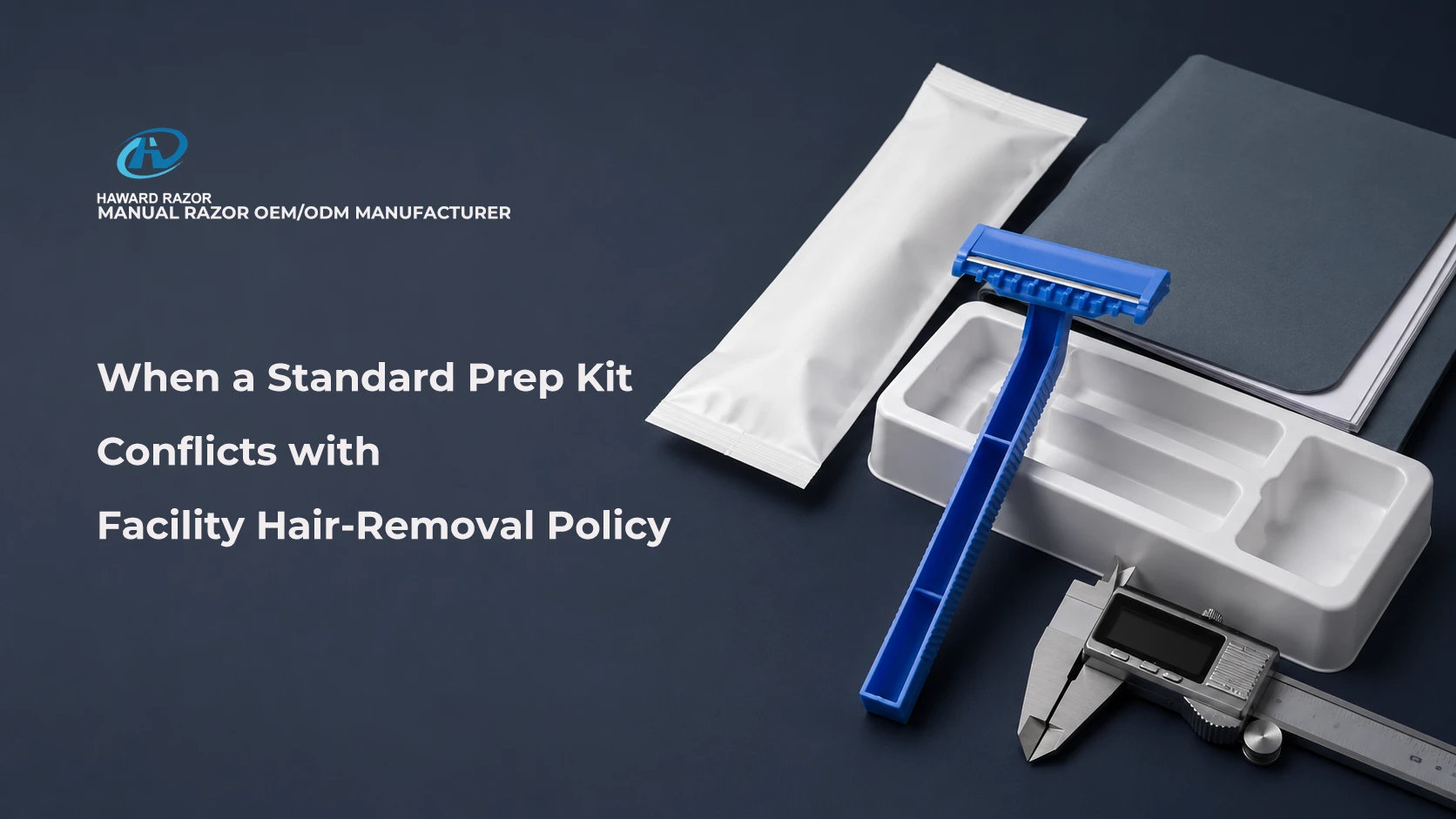
A medical distributor may receive a request for a hospital prep razor without a procedure description, approved removal method, or packaging specification. The kit assembler then selects a disposable razor, only to discover that the receiving facility requires clipping, prohibits shaving, or needs documentation the product cannot support. The result is avoidable stock rejection, artwork […]
Why Does a Pivoting Cartridge Feel Smooth in One Sample but Sticky in Production?
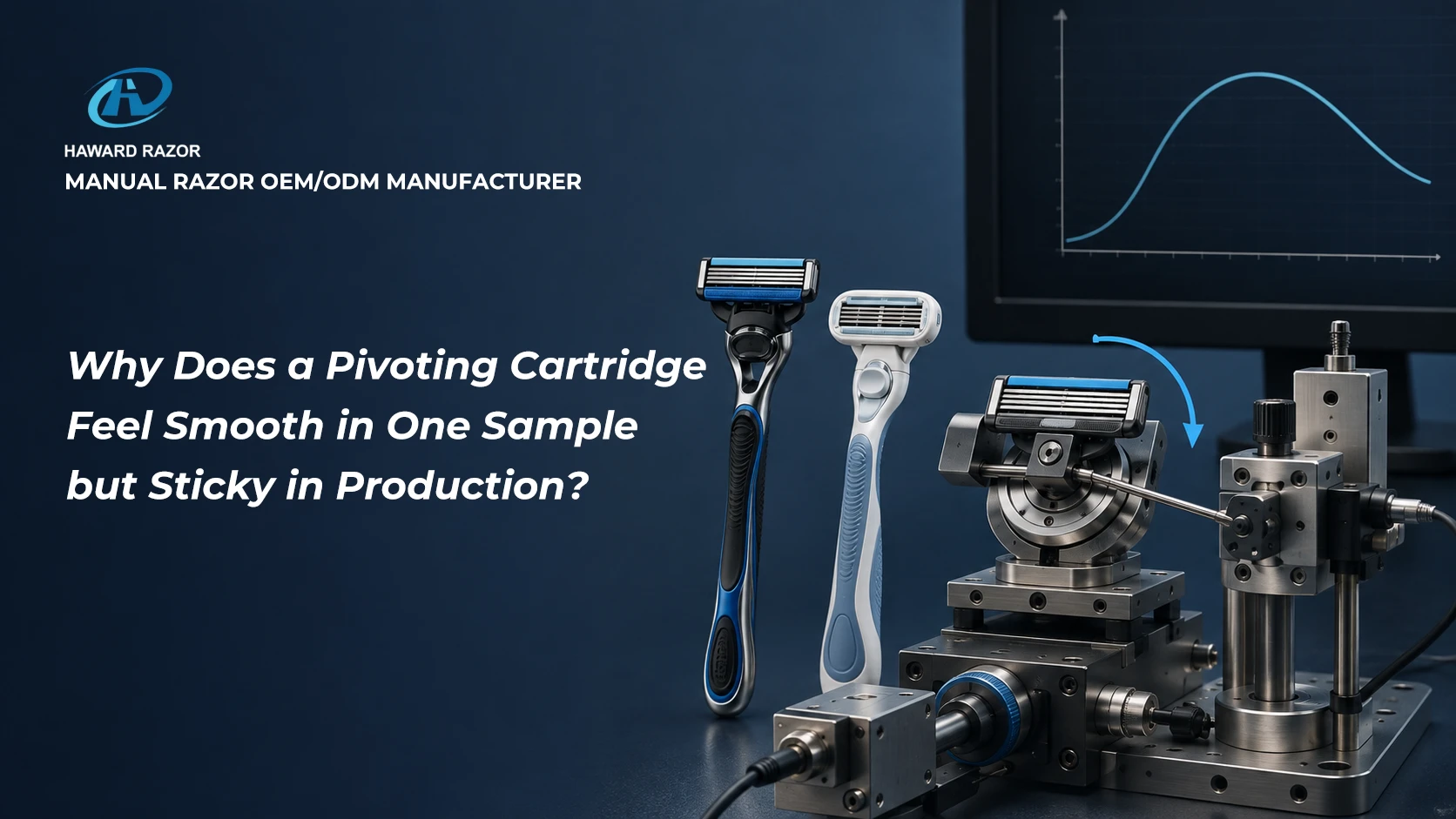
A prototype can pass an informal hand check yet fail after scale-up. The cartridge may resist its first movement, overshoot a contour, return slowly, or stop short of neutral. Uncontrolled razor pivot torque changes pressure feedback even when blade geometry is unchanged. The risk grows as resin shrinkage, spring variation, assembly offset, lubricant migration, water, […]
Can a Fixed Razor Price Survive Twelve Months of Material and Currency Shocks?

A buyer signs an annual Razor agreement expecting budget stability, but stainless steel rises, resin moves in the opposite direction, and the Supplier later requests an urgent price increase based on screenshots and general market news. The sourcing team cannot verify the claim, finance cannot reproduce the calculation, and production may stop while both parties […]
How Can Salons Prevent Cross-Client Confusion Without Overcomplicating Refill Inventory?

Beauty salon distributors rarely lose an account because a facial tool looks unattractive. They lose it when the range creates an unclear hygiene workflow, loose replacement heads, inconsistent wet-hand grip, or refill shortages during booked services. A reusable handle supplied without a defined single-client head policy becomes an operational risk; a fixed-head tool supplied without […]
Why Does a Cartridge Click into Place but Loosen After Wet Shaving?

Why does a cartridge click into place during assembly yet loosen, rattle, or release after wet shaves? The problem is rarely one dimension. Retention depends on latch geometry, plastic modulus, spring force, pivot loading, dimensional stack-up, water exposure, shave-product contamination, and cycling. A connector that is too weak can detach during use; one that is […]
What Happens When Your Paid Razor Mold Cannot Leave the Supplier?

A Brand Owner can pay every tooling invoice yet discover, during a supply interruption, that the mold cannot be released. The Supplier may claim payment covered development only, inserts belong to a third-party toolmaker, or unpaid storage and maintenance charges block transfer. Production stops while launch dates, retailer commitments, and replacement inventory keep moving. The […]
How Can a Busy Barbershop Prevent Cross-Contamination Without Slowing Every Chair?
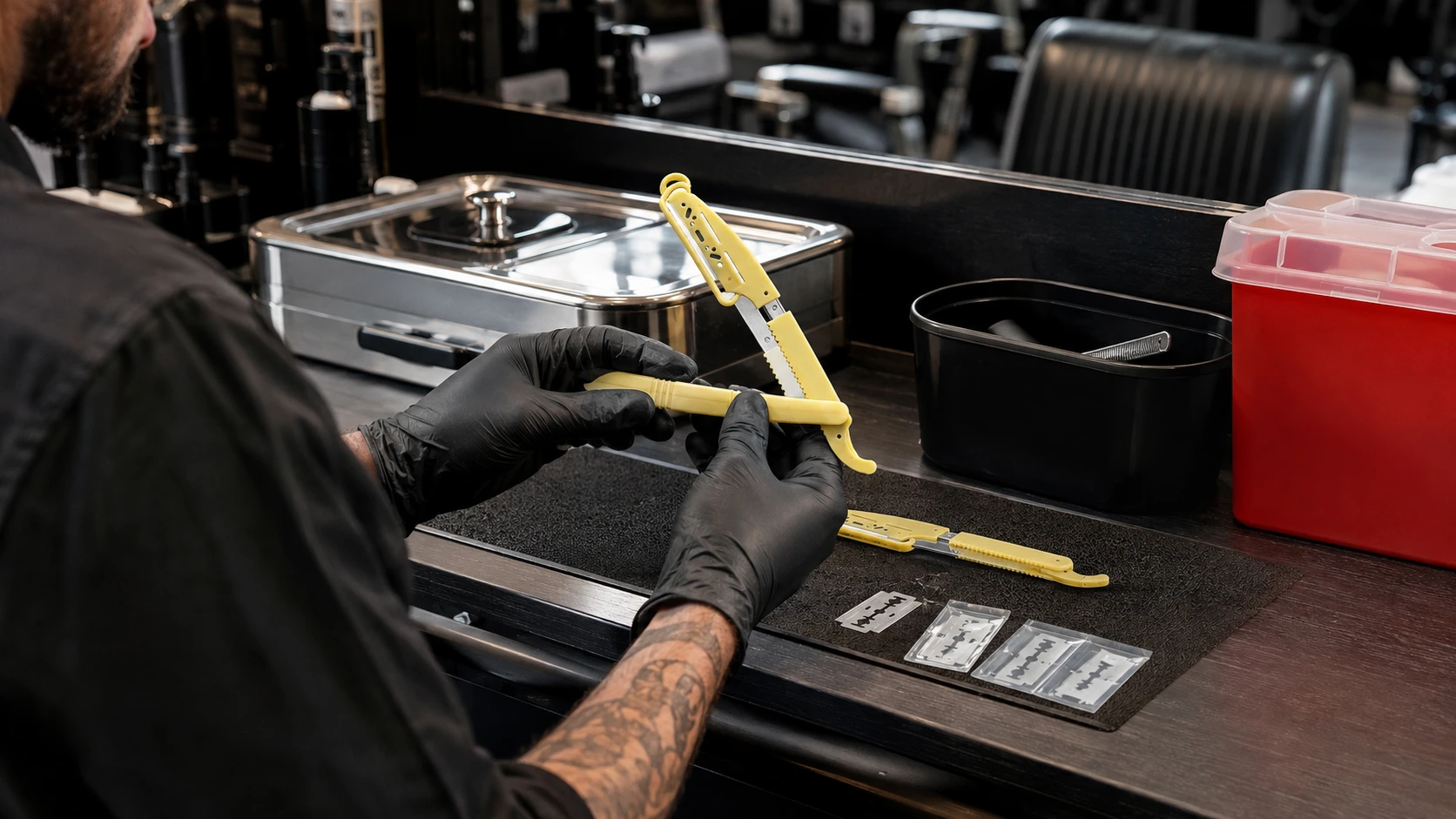
A busy barbershop may complete dozens of neckline, beard-line, and facial-detail services per shift. Every service introduces the conflict: the cutting edge must be fresh for each client, while the tool must return to the clean station without delaying the chair. If the blade is reused, removed unsafely, or loaded into a holder that traps […]
Why Does a Razor Feel Sharp on Day One but Pull After Only a Few Shaves?

A blade lot may show low first-cut force and still lose performance too quickly. That is the problem. If a Supplier reports only one fresh-blade result, the value can hide rapid coating loss, edge microchipping, tip deformation, or wide variation across the grinding and coating run. When buyer and Manufacturer use different media, speeds, blade […]

